
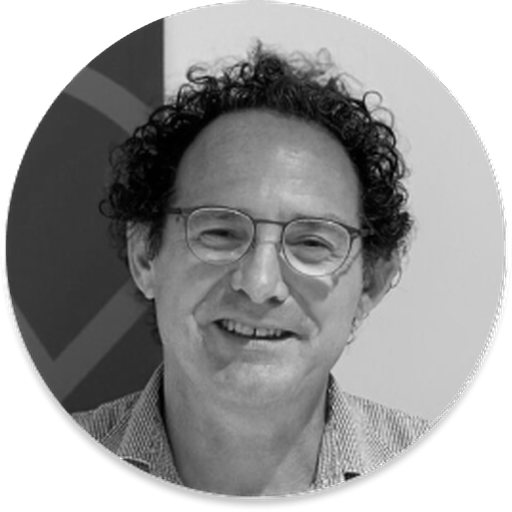
I spoke with Tim Duty, chief scientific officer at Qilimanjaro Quantum Tech in Barcelona, about their approach to analog quantum computing using a high-coherence fluxonium platform. Tim shared his fascinating journey from being one of D-Wave's first four team members to leading Qilimanjaro's pivot toward fluxonium-based analog processors, and explained how their three pillars — coherent optimization, quantum simulation, and quantum reservoir computing — differentiate them in the field. We discussed their 16-qubit hexagonal processor currently in development, their deployments at the Barcelona Supercomputing Center, and why analog quantum computing remains compelling even as digital fault-tolerant machines advance. Tim also described how Qilimanjaro grew from a systems integration company into a technology developer now completing its Series A funding round.
Key takeaways
- Duty frames analog performance as the product of qubit interaction energy and dephasing time (T2). Qilimanjaro chose fluxonium because it is intrinsically insensitive to flux and charge noise, so coherence starts high before coupling and scaling inevitably degrade it.
- The newly taped-out 16-qubit hexagonal processor is deliberately small enough to enumerate its states. Its purpose is to experimentally probe coherent annealing and couplings beyond ZZ, such as XX, which theory suggests could avoid small minimum gaps. Duty stresses these ideas are so far theoretical.
- Duty notes that D-Wave's roughly 5,000 qubits shrink to about 100 to 200 effective variables after problem embedding. He expects Qilimanjaro to face similar topology costs as it scales toward the thousands of qubits he targets via flip-chip modules, unless long-range coupling helps.
- Qilimanjaro, now about 70 people and nearing a Series A, began as a systems integrator deploying transmon machines, including two digital systems at the Barcelona Supercomputing Center. Duty argues targeted analog processors will remain more practical than universal fault-tolerant machines for optimization, simulation, and quantum reservoir computing.
What we get into
- From D-Wave’s founding to Barcelona: Duty describes being among D-Wave’s first four people, a Chalmers postdoc on charge qubits, Josephson junction chain research at UNSW, a fluxonium project back at D-Wave, then Northrop Grumman.
- An analog quality factor and fluxonium: He frames analog performance as qubit interaction energy times T2 dephasing time, and explains choosing fluxonium because it is intrinsically robust to flux and charge noise before coupling degrades coherence.
- Three pillars of analog computing: Qilimanjaro targets coherent optimization, quantum simulation of specific Hamiltonians, and quantum reservoir computing, where only some qubits serve as inputs and outputs and the rest supply complex dynamics.
- 16-qubit hexagonal processor and new couplings: The taped-out chip is small enough to enumerate its states, letting the team test coherent annealing and couplings like XX that theory suggests could avoid small minimum gaps.
- Embedding overhead and flip-chip scaling: Duty notes D-Wave’s roughly 5,000 qubits shrink to 100 to 200 effective variables after encoding, and expects similar topology costs as Qilimanjaro scales toward thousands via flip-chip modules.
- Analog versus fault-tolerant digital: Citing Google’s surface code results and early lattice surgery work from Andreas Wallraff’s group, he argues error correction remains hard and targeted analog processors will stay more practical for some applications.
- Deployment and calibration at BSC: With two digital systems and an analog fluxonium prototype at the Barcelona Supercomputing Center, he discusses noise sensitivity, flux bias lines, and flip-chip designs that cut crosstalk by one to two orders of magnitude.
- From systems integrator to Series A: Qilimanjaro, about 70 people, grew from deploying transmon machines under contracts and EU and Spanish projects, raised a seed round, and is nearly done with a Series A.
Key quotes
On choosing fluxonium
“So the philosophy is let’s start with something that intrinsically is very robust and very insensitive to these noise sources, and see what we can develop as our platform for analog.”
— Tim Duty
On embedding overhead
“Let’s face it, a D-Wave processor has maybe up to 5,000 qubits. They’re arranged in a 2D lattice. They have different types of topology, but the fact is by the time you encode an arbitrary problem, you’re down to 100 or 200 effective qubits.”
— Tim Duty
On analog versus universal machines
“I think it will eventually work, but I still think optimization and some analog applications will still be easier to do with targeted analog processors. You know, just because something is universal doesn’t mean it’s a very efficient, pragmatic way to do things.”
— Tim Duty
Transcript
Yuval Boger: Hello, Tim. Thank you for joining me today.
Tim Duty: Oh, you're welcome. It's a pleasure to talk to you today.
Yuval: So who are you and what do you do?
Tim: Who am I and what do I do? Those are interesting questions to start with. So who am I? Tim Duty, that's me. I'm the chief scientific officer at Qilimanjaro Quantum Tech.
We're based in Barcelona. We're a full stack quantum computing company, and we're focused on an analog approach, and we're doing that by developing a fluxonium platform. I have been around in this field for quite a long time. I was a PhD student at the University of British Columbia, and I shared an office with Geordie Rose and Mohammad Amin.
And so when D-Wave was started, I was one of the first four people involved, and that was very forward-looking, to say the very least. Mohammad's still at D-Wave. He's a really fantastic person. Geordie is doing something else, and the other founder, Alexandre Zagoskin, is a professor in the UK.
But I was with D-Wave when it started. I transitioned out of D-Wave. I did a postdoc at Chalmers, so that was very formative and productive years for me. I was working in the early days of charge qubits and all the problems we had with that, and that sort of created a lot of alternative things to explore.
I eventually went to Australia, became a professor at the University of New South Wales. I sort of stepped away from quantum computing for a number of years, but nevertheless, I was kind of watching things from the sideline. I was working with Josephson junction devices and, in fact, chains of junctions which are used in fluxonium.
I was doing more fundamental science with that. And then I decided maybe life was too short to only do one thing, and the industry had started, to me, to get very interesting. And there were lots of new developments with new ideas for qubits like fluxonium, like dual-rail, like cat qubits.
And all of a sudden I thought, "Well, now things are getting interesting again," and I had a little break from it. So I wound myself back into quantum computing with superconducting devices. I went back to D-Wave. I would say "back to D-Wave" because I had left them for 20 years. I worked on a fluxonium project there.
We developed a high coherence fluxonium. It was a really fascinating project, and I got to use my knowledge about Josephson junction chains to do something different from what I'd been doing. And then briefly, I was at Northrop Grumman before coming to Barcelona. So this opportunity arose.
It seemed like the type of adventure I really like to participate in, and here I am.
Yuval: Help me understand analog quantum computing. When I'm not doing this podcast, I'm an executive for QuEra. Our first computer, neutral atoms, is analog, so I'm familiar with it, but maybe it's different as you describe.
And then you mentioned D-Wave a number of times. How is Qilimanjaro's analog computer different than what D-Wave has been historically doing?
Tim: Okay, that's a very good question. So first let's talk about analog quantum computing. Analog's been around for a while. It predates, of course, quantum computing.
But in quantum computing, we really started to think about analog in the early days of D-Wave when the idea of doing optimization via quantum annealing started out. And back then it was a very speculative kind of idea. But I would say even at the beginning, we understood that that might be an easier route to implementation because even back then we understood that doing a digital, fully universal gate model quantum computer would be extremely difficult.
And so the idea was optimization and quantum annealing would be an easier way to scale, and D-Wave really showed that, I think. Now, there's been a lot of development since then, and the understanding of what analog quantum computing can be — more than optimization, more that in fact you could do universal things with it that might be very difficult.
And even right now there's still work being done on that. We have a guy on our theory team, Matthias Werner, who just put a really interesting paper on the arXiv not too long ago about polynomial equivalence of transverse Ising model, which is what most annealing systems try to implement, and how that can, in some sense, be mapped to gate model things.
So analog's a really interesting field. I think the main driver, both back in the early days of D-Wave and even now, is that we think it's a shorter route to doing something useful. And so the challenge that we're pursuing here at Qilimanjaro is to do analog — and I'll tell you a bit more about what analog means today — but to do analog quantum computing in a high coherence platform. That means we would like to be able to imagine you have qubits and they have some characteristic scale of interaction.
Then you want the product of that energy scale times the T2, the dephasing time, you want that to be a large number. That's like a kind of analog quality factor. And so you need to do that with a platform that allows you to have very high coherence. So we decided, after I arrived and got settled here — I convinced the company that we needed to do this using fluxonium.
And the reasons are well known. There's a lot of good reasons to use fluxonium in general for anything, and there's a lot going on right now to pursue this in both gate model and analog. But for us, we knew we could start with something that intrinsically was robust with regards to flux noise, to charge noise, and your starting point is high coherence, because when you scale things and start coupling things, you're going to degrade the coherence.
So the philosophy is let's start with something that intrinsically is very robust and very insensitive to these noise sources, and see what we can develop as our platform for analog. Now, what do I mean by analog? Well, of course, the optimization that D-Wave has made well known is probably the easiest thing to sample, and that's actually a really difficult thing to do with high coherence.
The other things that we're very much interested in here at Qilimanjaro, however, are quantum simulation. There are lots of interesting things where you can implement the Hamiltonian. D-Wave has shown that with spin glasses. But there are other systems that, if you had high coherence, you could do some interesting quantum simulations that are very relevant for science and understanding.
And the price you have to pay for this approach, of course, is you have to target your processor to do one thing really well. You really have to be flexible, and you have to build the processor to do a certain thing really well.
So we're looking at, of course, optimization — coherent optimization. There are a lot of interesting additions you could make, not just coherence. So that's one of the pillars. We sort of have three pillars at Qilimanjaro. The second pillar is quantum simulations, and I won't go much into that.
We have some papers on the arXiv. But of course, you can build a processor that simulates certain models very well. And then the other one, which is really new and very exciting, is quantum reservoir computing, which is a field of quantum machine learning.
There's a lot going on right now. There are a lot of interesting results both on the analog and the digital side of things. There's this work by John Preskill at Caltech that has really told the world that there's something here that we need to really think about and develop because there's some very big potential that quantum has to offer in the machine learning realm. There's been some interesting work specifically on quantum reservoirs where people have used NMR systems — nuclear magnetic resonance, a molecule with seven or nine qubits, the number is very small — and shown that you could do time series prediction with a handful of qubits that's equivalent to many, many nodes in a type of neural network.
So we're very much interested in that and we're putting a lot of energy both in understanding what we can do with quantum reservoirs in particular, and how to actually implement that in a processor. One of our three groups just put a paper out on the arXiv as well. If people are interested, it's called "From Quantum Reservoirs to Quantum Extreme Learning Machines," and it shows that with a very modest system, a chain of qubits, you can actually do some interesting quantum reservoir machine learning experiments. So that is our three pillars of analog.
And this last one I find really compelling, and almost every day something new comes out in this area, so we're very excited about that. We're actually putting some energy into designing a processor for quantum reservoirs based upon fluxonium.
Yuval: Does that mean that you have multiple processors, or today just one design that's live?
Tim: Well, we have one that we're really focused on, and we're updating. We just actually did a tape out for this version, which is 16 qubits in a hexagonal configuration. So 16 qubits gives you four hexagon faces, and the real motivation for that is really to explore coherent annealing with a system that you know well.
And in fact, you can enumerate the states of a 16-qubit hexagonal processor, and because you can understand it, we believe it's a good system to try out some novel ideas and show coherent annealing. But we're also, with that in mind, with small variations of the platform we've built, now working on designing something for quantum reservoirs, and I can't really tell you too much about that.
But the interesting thing about quantum reservoirs is that not all qubits are doing the same thing. For something like annealing, all the qubits have to be initialized, they have to be read out, they have to be coupled to each other, and so forth. But with quantum reservoirs — and this is really ongoing research — not all qubits are doing the same thing.
You have a small number that can be input qubits, and a small number that can be output qubits. In fact, sometimes in some models the same qubits can do input and output. But then the idea of a reservoir is that you have this system where you don't really need to measure everything and read it out or even control the coupling individually.
It just needs to do some rather complex dynamics, and that's where the power is. So we're in the process of designing a larger processor more with the aim of quantum reservoirs. We haven't made that yet, but we're starting to put the pieces together and figure out what we can do with it and what it looks like.
But it's very much along the same lines. It is based upon fluxonium and the inductively coupled fluxonium that we're using for the other processors. Now, we also have discussions about different kinds of coupling with fluxonium and how we could do that. We're very enthusiastic about fluxonium as a platform to grow with because it's very flexible.
It's very tunable, and even recently there's an initial result, a draft on the arXiv by Stefan Filipp's group from Munich. One of his researchers gave a talk recently about a five-qubit fluxonium gate model processor, and the results are really very nice.
I don't have to go into details, but people are finding this is a very good platform, and we're excited about it because we think we can do the things we want to, but if we need to pivot to other things, we think it's a very flexible platform.
Yuval: When I think about D-Wave, I know that they advertise that they've got thousands of qubits, and the issue really is mapping the specific problems that they can tackle onto those qubits given the connectivity and all the other constraints.
So you can start with a qubit problem, and I think over time they've developed more and more software that makes it easier to map specific types of problems into their processor. You mentioned 16 qubits, so I'm trying to understand. There's a completely different scale from what D-Wave is doing.
And what problems could you solve at Qilimanjaro that one could not solve on other analog processors?
Tim: Well, you're absolutely right. Let's face it, a D-Wave processor has maybe up to 5,000 qubits. They're arranged in a 2D lattice. They have different types of topology, but the fact is by the time you encode an arbitrary problem, you're down to 100 or 200 effective qubits — like logical qubits.
So you pay this price, and that's going to be true of almost most of the easy kind of architectures you can imagine. Of course, you could come up with some interesting ways of coupling things, and we're looking at different options. But for us, the 16-qubit processor we're making at this point is for us to start building up our platform, to understand what the issues are and to work out how we scale that to larger numbers, up to the thousands we think.
And so this — I'm really much focused on this short-term processor, but what the value in it will be is to basically see how coherence works in annealing, because no one's really been able to experimentally look at this very well.
See what we learn and see where we can go with that and to try out different types of interactions. There are ideas — without getting too technical — there are some limitations when you try to do either adiabatic quantum computing or quantum annealing. The question becomes, as you anneal your system, what's the minimum gap that you go through?
And that affects how fast you can do things. And there, if you have other types of interactions — like the standard interaction, for example, in transverse Ising would be a ZZ interaction. But if you have XX, for example, or some other transverse field that you can work into the mix, you can avoid these minimum gap, Landau-Zener tunneling problems. So at the moment there are a lot of ideas about what you can do with coherence and different types of coupling, but they're all theoretical ideas. Our short-term goal is to implement that and see what you can do with it and figure out how to scale that. So that's the short-term problem. But we believe eventually we can get to thousands of qubits, and we also believe that by — right now we've implemented a flip chip architecture where we have a bottom chip with most of the control and then the qubit chips, and now we have coupling that should allow us to put multiple qubit chips.
So we think we have a path. We have a lot of issues to work out too, because frankly, it's hard to scale a processor and keep coherence high, and that's what we have some ideas about, and that's what we're focused on. But I wouldn't say it's impossible.
At the same time, I would say you're going to have similar problems — you're going to have to encode a problem and you're going to end up effectively reducing the number of variables that you can actually do in a processor because of your topology. That is true, and there may be some ways to get around that by implementing long-range coupling and so forth.
And those are also very active areas that we're looking at. But yeah, that's where we are.
Yuval: The elephant in the room in the analog computing world is digital computing, right? Depending on who you believe and how much you find their roadmaps believable, fault-tolerant quantum computers — digital, universal ones — are coming in '28 or '29 or '30 or '32.
If you take their own roadmaps at face value, wouldn't that make analog quantum computing obsolete, or relegated to very niche use cases?
Tim: Well, I don't think so. One, because to do the universal gate model requires error correction, and that is a tough game. There've been some very encouraging results from Google, of course, recently.
They show in principle this surface code works, and it does scale, and it's very nice. But that's only for keeping the logical qubits coherent. There's also a lot more. There's been some nice work, by the way, by Andreas Wallraff's group, showing some early demonstrations of lattice surgery, which is what you need to do gates.
But if you really think about that problem, there's a lot that needs to be done, and it will be difficult. It will be hard to scale. And even if — I think it will eventually work, but I still think optimization and some analog applications will still be easier to do with targeted analog processors.
You know, just because something is universal doesn't mean it's a very efficient, pragmatic way to do things. So I'm not too worried about it. But the field's really developing, and there are ideas. If you're with QuEra, you know that there are ideas that you can mix some analog manipulations or time-dependent Hamiltonian type of things, which are characteristics of analog processing, with two-qubit gates.
And there are some interesting hybrid kinds of things coming out, and I think this is a very open field right now. So it's viable, in my opinion, to have both. But we want to focus on the analog. Although I would say we believe that developing this platform, if we need to pivot down the road, I think fluxonium will allow us the possibility to pivot more to the digital realm if we need to do that.
But we're trying to — whether you do digital or analog, you want to use fluxonium. There's a lot of advantages: higher anharmonicity, lower frequency, lower residual interactions. But because of their tunability and control, there are some things you have to sort out first just as a platform.
Yuval: I believe you installed a system at the Barcelona Supercomputing Center, or are about to install one.
Tim: Well, we have three there. We have two digital ones that have been there for a while, and then there's this analog prototype that's our current thing that we're working very hard on. So yeah, if that's what you're referring to, yes.
Yuval: Thank you for that. So what do they use it for, and what have you learned through the process of integrating it at the BSC?
Tim: Well, those are some interesting questions, and there's a lot of answers to that. So what have we learned particularly about the analog one compared to the others? Well, technically there are a lot more flux bias lines, and the DC flux bias of course is not scalable.
We know that. We know what we need to do. But in terms of deployment, noise sensitivity has been more challenging with this one. A lot of the things are very similar to our past deployments. Of course, there's a lot of work from the code point of view and the user point of view, trying to capture all that and expose that functionality.
This was our first fluxonium processor, so as you can imagine, there were a lot of things with room for improvement. We are fabricating a new processor now that I think is going to be — well, it's definitely, in my opinion, the most complex fluxonium processor ever made by anyone, whether that's analog or digital.
So we're very excited about this new version that's currently being manufactured. And I can tell you more about it once it's calibrated and showing results. But we took the lessons we've learned and really worked very hard to boost the functionality and the performance of this next one.
Yuval: Does working with your processor require special software? And how are you going about making it easy or easier for users to do so?
Tim: Yeah, so as you can imagine, the other digital machines are tunable transmon-based things, and there are a number of groups that know how to calibrate these.
The electronics is all based on established approaches. I'm not saying it's not work, because we developed our own software, but there's a lot in the literature and a lot of knowledge out there that's been very helpful. So for the fluxonium processor, the calibration has a lot of different things in it, mostly flux bias lines.
And by going to a flip chip, we've reduced the crosstalk very significantly, at least an order of magnitude — maybe almost two orders of magnitude — compared to what you would get in a planar system, and that's helped a lot. But yeah, we've developed our own calibration routines and prepared everything to get things ready for someone to use.
And of course, encapsulating that in an efficient package is a real challenge, and figuring out what to expose to users is also something that's required a lot of consideration, and it's still a work in progress, I would say. I would say it's probably similar to the first time people tried to do things like this for transmon systems, but there are a lot of subtle differences.
And in the end, a lot of the measurements are the same. We do single qubit rotations, we observe, we do Ramsey, Rabi, all the standard characterization. So there are a lot of similar issues, but there's the extra complication that our qubits are tunable fluxonium, so each one has two flux loops. So from every aspect — from processor design to calibration and control and use — all this extra control puts a lot of challenges in both the calibration and development.
And even the design — we've gone through many versions of on-chip flux bias lines and we still have ways to improve it, mostly with footprint and noise and all these things. So that's the real challenge, technically, that propagates all the way from chip design up to the user.
Yuval: Could you give me a quick snapshot about the company?
How many people do you have? Is it all in Barcelona or spread out? How are you funded? Anything that you're willing to share.
Tim: Sure. Qilimanjaro is a really interesting company, and even from having been involved with and knowing a lot about others — from D-Wave when it was a startup to D-Wave as a mature company, to my short time at Northrop Grumman which is a very large company, to knowing other companies.
So Qilimanjaro at the moment is about 70 people. And I guess what's unusual about Qilimanjaro — when I talk to others they find it a little bit surprising — is that, long before I arrived, Qilimanjaro started as a systems integration type of business. I think it started when the UAE wanted a prototype transmon-based quantum computer, and Qilimanjaro got the contract and deployed it there.
And then this grew, and so we've had projects both with the European Union and Spain that have paid the bills and allowed Qilimanjaro to become very good at systems integration and deployment. Including things like, "Here's a user manual for the users to use this system." And so Qilimanjaro built itself up doing that, and I think the company does a really good job of that by now because of the experience.
And it's funny because I've talked to some other people in startups and they say, "Oh my gosh, the deployment, that must be horrible. How are we going to do this?" And it's like, well, you just do it, and after a while you learn the ins and outs and you become good at it. So Qilimanjaro sort of built itself up that way, and then to the point where we could start developing our own technology with fluxonium.
So that's what makes it different. Our funding up until recently was projects and contracts — deployment contracts or projects based upon deploying like the digital systems at the Barcelona Supercomputing Center. But then, about the time I joined — I joined two years ago — there was a seed round of funding, and now we're almost completing a Series A.
And I can't say much about that at the moment, but it's a transition for the company from being very much focused on deployment and systems integration to developing technology. The developing technology has been there all along, but it's really taken off in the last couple of years since I joined the company.
And that also means that the funding perspective is changing as well. We still are taking on deployment projects because we think that is valuable. One, it brings in income, but it's a valuable service and a valuable portfolio to have. And we will also invariably still apply for large European grants or projects and so forth.
So we don't want to get rid of that. It really keeps you on your toes to do those things. And then it allows you to have that base when it's ready to deploy your own things. So I consider it a very unusual but very valuable part of the company.
Yuval: Tim, as we wrap up our time today, I wanted to ask you a hypothetical.
Tim: Sure.
Yuval: If you could have dinner with one of the quantum greats, dead or alive, who would that be?
Tim: One of the quantum greats? Well, you know, I know some of the quantum greats, and I've been very fortunate. For example, when I was a postdoc at Chalmers, John Clarke was visiting often, and we spent a lot of time talking about things over the years.
And John Martinis was also visiting, and I've known John. I took John flying in a glider once in Australia. I'm a gliding instructor. And we got into an interesting discussion in the office about, first about physics — he was visiting UNSW — and then we started talking about aerodynamics, and so I took him for a ride, and it was great.
And I know Michel not as well, and I had dinner with Rob Schoelkopf. So who would I — I've been very fortunate in having amazing interactions with at least the quantum greats in superconductivity, and it's been invaluable. I haven't really thought about that question.
Yuval: You could also choose someone who's dead, who maybe you didn't have an opportunity to speak with in real life.
Tim: Yeah. Wow. Okay. Well, of course, Feynman would be fun. I think that would've been someone.
I've been so inspired by his lectures, you know. I still have them on my shelf here. Who else? Wheeler maybe. I would have liked to have met some of the early experimentalists like Lawrence, Berkeley, or Fermi. I'm an experimentalist, so I think I would've liked to just see what the perspective from some of the early experimentalists would be on some of these things.
But yeah.
Yuval: Tim, thank you so much for joining me today.
Tim: Yeah. It was a pleasure. Great to talk to you. And yeah, I'll try to tune in for some others of these. It seems like a good thing to do, and we're happy to try to let people know what we're doing. It's an interesting time, really.
Yuval: Absolutely. Thank you.
Yuval Boger is the Chief Commercial Officer of QuEra Computing.


