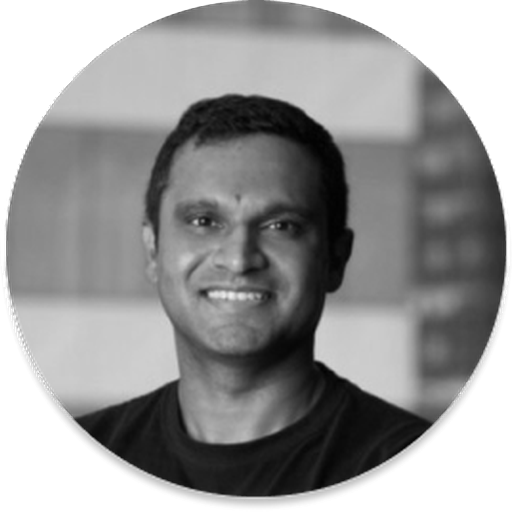
My guest today is Callum Stewart, who leads deep tech investing at Bullhound Capital. We spoke about the quantum investment landscape and what separates brilliant researchers from capable startup leaders. We discussed Bullhound's portfolio — including Q-CTRL, OQC, and Multiverse Computing — and why Callum believes quantum companies should be building customer-facing platforms now rather than waiting for fault tolerance. Callum shared his prediction that quantum funding may hit a lull before a wave of consolidation reshapes the industry, the growing tension between quantum nationalism and the collaborative spirit that has defined the field, and much more.
Key takeaways
- Stewart expects the steady rise in quantum funding to break, with a possible lull next year or in early 2028 as public markets cool and investors accept there is no quick path to a commercially usable fault-tolerant machine. He expects a rebound once early signs of commercial quantum advantage appear, with consolidation along the way, and his advice to companies is to raise while they can and hold a long-term commercial roadmap.
- Bullhound began with modality-agnostic bets like Q-CTRL and Multiverse Computing, then backed superconducting hardware maker OQC. Stewart says the shift came because hardware is improving while qubit requirements in recent RSA-breaking papers have dropped by orders of magnitude, which in his view firms up timelines enough that a slip of a couple of years matters little at venture scale.
- Asked why companies would install today's 'toy' machines at customer sites, Stewart argues it must happen alongside work on core bottlenecks. Finance and biotech experts need to use these systems without learning quantum physics, and he sees banks beginning to fund algorithm work beyond Shor's algorithm. He expects a 'Transformers paper moment' sooner than a 'ChatGPT moment.'
- Stewart predicts that SPAC-funded public players will buy startups solving specific component problems such as wiring or cryogenics, which shrinks the company count but improves exit options for investors. He also sees government and defense as a durable buyer for capabilities like Q-CTRL's navigation sensing, while warning that quantum nationalism is already pushing some investors off cap tables.
What we get into
- From 2D materials to venture: Stewart describes his Cambridge PhD growing graphene and hBN to localize single photon emitters, and why materials science was useful preparation for deep tech investing at Bullhound.
- Researcher versus scale-up leader: He says founders who can both develop technology and lead a 200 to 300 person company are rare, citing OQC’s pairing of CEO Gerald with scientist Peter Leek.
- Why Bullhound backed a modality: After modality-agnostic bets on Q-CTRL and Multiverse, Stewart explains the OQC investment by pointing to improving hardware and recent RSA papers cutting qubit requirements by orders of magnitude.
- Putting ‘toy’ machines at customer sites: Stewart argues on-site deployment must run alongside solving core bottlenecks, so finance and biotech experts can use systems without learning quantum physics as banks fund new algorithm work.
- From a $1B to $20B market: He says growth to 2030 depends on more people working on these systems, and expects a ‘Transformers paper moment’ well before any ‘ChatGPT moment’ for quantum.
- Component startups and acquisitions: Stewart expects SPAC-funded public players to buy startups solving wiring or cryogenics problems, shrinking the company count while improving exit options for venture investors.
- Government as a durable buyer: Discussing Q-CTRL’s defense and navigation sensing work, he calls government the buyer of first resort for capabilities, though not ideal for sporadic compute time purchases.
- Funding lull and quantum nationalism: Stewart predicts a funding lull next year or early 2028 before a rebound tied to commercial advantage, and notes national security concerns already pushing some investors off cap tables.
Key quotes
On firming timelines
“So you almost have the hardware pushing from the bottom and algorithmic improvements pulling from the top, and that makes me think that the timelines people are talking about are firming up.”
— Callum Stewart
On quantum’s next milestone
“I think we’re still a long way off a ChatGPT moment, but maybe we’re not far away from a Transformers paper moment, where you’ll start to see it proliferate even more and we’ll see that expansion of potential customers in the market overall.”
— Callum Stewart
On surviving a funding lull
“Raise money when you can, and make sure you have this long-term strategy to developing a commercial roadmap so that when those next investors come knocking and the next wave comes, you’re still around and you’re able to capitalize on that.”
— Callum Stewart
Transcript
Yuval Boger: Hello, Callum. Thank you for joining me today.
Callum Stewart: No, it's a pleasure. Thank you for having me.
Yuval: So who are you and what do you do?
Callum: Yeah, my name's Callum Stewart. I lead a lot of the deep tech investing at Bullhound Capital. I'm not a finance guy by background. Before joining, I did a PhD at Cambridge, where I was actually dabbling in the quantum world a little bit. I was growing large area 2D materials like graphene and hBN, and then using them to localize single photon emitters. So think of diamonds, NV centers — it was similar sort of stuff there. Being a material scientist was actually probably one of the best PhDs to do to go into venture, because you develop this new novel material structure and then everyone wants to use it. So you get to do a little bit of everyone's projects — a little bit of energy, a little bit of biotech — but ultimately I was building these devices for long-term quantum applications. It's still a novel material. But yeah, now I lead a lot of the deep tech deals that we do here at Bullhound.
We're a late-stage venture or early growth investor, investing Series B, Series C, into deep tech businesses around the world. Within the quantum space, we've led investments into Q-CTRL, led investments into OQC — the round that just closed earlier this summer — and Multiverse Computing. We don't just do quantum, but it is part of our portfolio approach to this new IP-heavy world that we live in.
Yuval: It used to be that being a physicist had limited job opportunities, and now all of a sudden with quantum… So maybe you left physics too early.
Callum: Well, I think at the time, my PhD when I was doing it wasn't really sexy in the real world. When you said semiconductors or 2D materials and quantum, everyone was just like, "Yeah, okay, fine, let's ignore that." Whereas these days if you say any of those three words, people are like, "Oh, wow, amazing. What's your view on NVIDIA? What's your view on this?" So I've been fortunate, shall we say, in my career that this confluence of factors has happened at the same time, in a shorter timeframe. And it's exciting, right? We're seeing no longer just software SaaS businesses getting built and getting funded. We're actually seeing real scientific development happening in the private markets, and the public markets, but private capital going towards it.
Yuval: Many of these companies are led by physicists. What do you think separates a brilliant researcher from a capable leader that you would actually invest in?
Callum: Yeah, it's a very good question, and it's something we debate about a lot. There are certain cases where you look at a business at some point in its timeframe and you love the technology, but you just can't necessarily believe that the founder or the person who's developed the tech is the one to lead a 200, 300 person business and become this scale-up opportunity. And this isn't just quantum — this is all of the deep tech deals that we look at.
Those who can do both are a bit of a unicorn — not in the unicorn sense of valuation, but in the sense that they're very hard to find. But when you do find them, it almost makes your decision easier because you can see they've got the ability to develop the technology, they're smart enough to understand where the bottlenecks are, but then personable enough and aware enough to talk to people, to inspire people. That kind of makes your decision a little bit easier to invest in them because you can see both sides.
Then on the other side, people who aren't necessarily that way inclined but are still really good researchers — the good ones are the ones who realize that early and partner with other people to come and do that for them. OQC is a great example, bringing in Gerald to be the CEO and lead the business. He's very good at setting the direction and the story, whereas Peter Leek is great at the underlying science and the research, and together they make a very powerful team.
Yuval: Before OQC, I think that most of your investments were hardware agnostic. What changed your mind? Why did you pick a particular modality, and are you open to other modalities?
Callum: I would say I'm very open to other modalities. There's a few that I'm really excited about, neutral atoms being one of them as well.
Because we're that later-stage investor, we've had a different approach to investing in quantum as the timelines get shorter. Q-CTRL being agnostic to the underlying modality made sense when we did that investment because the timelines for each of the modalities were maybe a little bit more fluid and uncertain. Same with Multiverse Computing — their foray into AI meant it could give us more comfort in the case.
But I think what you're seeing in quantum, and us living in it and following it every day, is we're very much within the early stages of an exponential function. You're seeing the hardware improving across the different modalities, but what you're also seeing is the cubic requirements, especially in the recently published RSA papers, dropping by orders of magnitude. So you almost have the hardware pushing from the bottom and algorithmic improvements pulling from the top, and that makes me think that the timelines people are talking about are firming up. Yes, they may slip a couple of years, but I don't think that necessarily matters too much in the VC scale.
So I feel in this timeframe, you need to be investing in some form of modality or hardware. Again, I still think there are a lot of issues with each, right? They all have their near-term or longer-term bottlenecks to overcome in scaling and speed and what have you. We won't get into that here because it's a can of worms for everyone.
But what I really liked with OQC was that not only do they have this differentiated superconducting architecture, what they're really focusing on building out is a platform. They're one of the first companies I've spoken to that started thinking about how to put these computers where their customers are, in co-located ring-fenced data center environments, so that they're working on them the way they would work on any of their other computation tools.
And that by itself is no mean feat, right? You start thinking about cost per tile, connecting into the actual systems running there. So I like the approach of using their hardware as a wedge to build a platform, which has then led to these partnerships with JPMorgan and AMD to develop these quantum AI for finance data centers. That can be a platform to build their own hardware, but also bring in others and help to boost everything.
Yuval: I don't mean to pick particularly on OQC, so please consider this more of a general question. Today's quantum computers are toys. Right? They're toys in the sense that there's not much you can do with them that you couldn't do classically, and a company can only do a certain finite number of things. So why would you advise OQC or companies like OQC to install these toy machines at customer sites instead of focusing on solving the long-term issues of the modality?
Callum: Well, I think it goes hand in hand, right? You need to be able to work with customers to see how they can work, because we're talking a timeframe when we invest of up to ten years. So that timeframe covers a lot of those issues being worked on, and that's why they raise a significant amount of capital to do both of those things.
But it's no use having a really good research project that no one can use. So I think you need to be at that confluence of when things start to progress, and the toys get to a point of real usability — which I think is nowhere near that ten-year timeframe, it's a lot closer — then you need to be there and where they can work.
One of my views is a lot of the research into algorithmic improvements has gone into RSA, right? It's the one big problem — Shor's algorithm to crack those issues. It's the big problem that everyone wants to focus on, and no one has really spent a significant amount of capital, time, and money. JPMorgan, Citibank, all of these other groups haven't been spending significant money to see what they can do with quantum, what new algorithms they can develop. You've seen some things, but I think what you're really seeing now is a commitment from them to say, "Okay, these timelines are starting to look like something that we need to start thinking about," so they will start to spend this money to work on these problems.
And I think that helps to move these from being a toy to the next level, because you start integrating them, you start figuring out that you can do more on that toy. Maybe not these generations, but the one-to-two year timeframe one. So that's kind of the approach we're viewing from that regard.
So absolutely, they should still be focusing on their own bottleneck problems, but I think you need to also be pragmatic and say, "Okay, we need to solve all of that whilst also making sure that people can use these." And not just quantum people — we need actual finance experts, biotech experts being able to operate these systems without having to learn quantum physics.
Yuval: I think you were on the record saying that today's market size is about a billion dollars, and in 2030 it's going to be about 20 billion. What needs to happen between now and then, and where do you think that money is going to either come from or go to?
Callum: Yeah. What needs to happen between now and then — and I think that's part of what I was saying before — is you need more people who understand or are able to work on these systems so that the problem set starts to proliferate and the issues start to become more apparent.
If you think back to classical semiconductors, there's a lot of new inference chips being developed to challenge Nvidia. Getting those in classical silicon into tape-out is, what, two, three years from final design. So you need to be able to work through all of that and make sure you have those customers when you've gone through that extensive process.
So I think it's being intelligent about how we expand the customer base, how we make sure that they're able to use our systems when they are capable, and start to make them realize what's possible. One of the things is that some people mention that quantum will have a ChatGPT moment in the next few years, and that will boost spending and everything. I think we're still a long way off a ChatGPT moment, but maybe we're not far away from a Transformers paper moment, where you'll start to see it proliferate even more and we'll see that expansion of potential customers in the market overall.
And I'm not just necessarily talking about quantum computing, right? We also have the quantum sensing side of things, AI for quantum — those things all feeding into that larger initial market.
Yuval: I was speaking with someone that counts the number of quantum companies. I think when I spoke with him, he said it was 84 companies. I'm sure by now it's closer to 100. So someone new comes to you and says, "I've got a new way of routing wires in superconducting qubits that solves these problems," or, "I've got a new cryogenic system." Are you into that, or do you think that capital really needs to go more into established players?
Callum: I think now we're going to get to a point where maybe you step on a few toes. Some companies have become established players because of, shall we say, luck of when they did their SPACs and things along those lines.
What interests me about the next wave of those people solving those individual issues is that they will start to be acquired by those with a lot of capital, who maybe start to realize that their way of doing things won't necessarily scale. So from our point of view, that's quite an interesting angle — I wouldn't say de-risking, they're all very risky investments — but increasing the exit environment so that we can get capital back from these investments. There are fewer and fewer of these companies at scale on the private markets, because a lot of them have gone through the SPAC processes. So while their public market sentiment is buoyed, they will then look to acquire some of these other groups. And you've seen it happen a lot with IonQ and other groups doing the same sort of thing — buying the technologies that make their own roadmaps better.
So I think we'll start to see that 84 maybe shrink a little bit. But that doesn't make those newer ones worse of an investment, because I think you can still get a significant return as everything starts to heat up a little bit more, post that Transformers paper moment.
Yuval: I'm obviously on the vendor side, but you probably speak with many customers as part of due diligence. How do they look at quantum companies? Do they all feel the same? Do you feel that too many companies are pitching vague and generic benefits for quantum?
Callum: I think that's what we really like about those who are very customer-focused. It's like, "Well, let's take you on this learning journey of what you need to solve." And almost the best praise is when you talk to some of these big customers and they say, "They're the best group we've ever worked with. They've brought us up to speed on a lot of these applications or issues or things that we could solve and brought us on that journey."
Because as you say, a lot of these are toy problems, so it's more about how they interact with what those customers' long-term journeys are. There are a lot of groups going after small problems, so it's those that are expanding the overall problem base and the customer base that aren't fighting against everyone going after very small applications in the near term.
Yuval: I want to ask you a couple of questions about some of your portfolio companies. We spoke about OQC. When I look at Q-CTRL, it seems that they're going dual track — a lot of their revenue comes from government-related things and then some from other sources. Do you see that continuing, or do you see the government more as an interim revenue source until the commercial market actually picks up?
Callum: Well, I think Q-CTRL is a unique beast in that regard, right? The sensing side of the business has a lot of defense-related, logistical, and navigation applications. So obviously, if you're selling through that avenue, one of the only customers is defense and therefore government. Yes, obviously you work with the primes along the way.
So I think that's always going to be the case. Government and defense have always been key backers of new technologies and have almost been the buyer of first resort, especially in the US. It's how SpaceX got going, right? It's how Silicon Valley got going. It's a tale as old as time.
But I think part of what Q-CTRL is very good at is bringing what they learn from that development into their actual commercial products, and then also having the commercial angle as well for their sensing products, be it commercial air flight and those things.
So government is absolutely going to be a relevant buyer. Are they necessarily the best buyer to have if you're just buying sporadic compute time? I don't think so. But if they're buying specific capabilities for defense, for national security, for the health service — maybe that's a little bit longer away — then I think that's actually a fundamental way to build a local champion.
And you're seeing the US government start to realize that with quantum, backing a lot of those companies, and the UK government the same. You have to make your winners for something as crucial for national security as quantum potentially is.
Yuval: With Multiverse, I think they went the route from being a quantum company to not being a quantum company. Do you see it the same way?
Callum: Yes. I think they're now very much a unique novel AI company, but with enough roots in quantum that as quantum for AI and AI for quantum starts to develop in the next few years, they'll be at the forefront of that too.
I think what Multiverse is a great example of is what is maybe unique about some parts of the world — Europe, Australia — where you have specific research groups attached to universities that are very good in a specific field, but kind of fly under the radar because, in Europe especially, the capital environment isn't as fluid or developed as the US. So they can work in silence developing this novel technology or approach to problems, and then if they do get the capital, it can be an accelerant.
So I think Multiverse has done very well on that side, finding a very niche use case developed on some quantum mathematics and approaches that Román had developed, and now using that for a technology advancement that others haven't necessarily spotted within the AI space.
Yuval: Let's assume we'll speak again in two or three years, do a follow-up interview. So I want to set you up for that.
Callum: Yeah. Cool.
Yuval: What's a consensus belief in quantum investing right now that you think will look naive in three years?
Callum: I think the consensus is that the funding is just going to keep increasing. The last two years you've seen massive year-on-year increases in quantum funding, partly due to all the SPACs that are happening, partly due to investor appetite. I think next year or maybe early 2028 could be a little bit of a lull as maybe the public markets start to cool, as people come to realize that it's not going to be a quick buck. It's not going to be a quick, "Oh, yes, we've developed a fully commercially fault-tolerant usable machine."
Next year you might start to see some of the air come out of the market, which is why I think that all those who can raise a significant amount of capital right now are well-positioned to weather that storm. That will then, I think, be reversed as soon as you see some inklings of commercial quantum advantage. So maybe the year or two following that downside. That's when you'll start to see maybe some of this consolidation as companies start to struggle, or at least as you come out of that, you'll see some consolidation as companies buy that tech or that algorithm development or something along those lines that they think can supplement their own stack.
So it's been a great couple of years for fundraising in quantum, but the music will stop at some point before it starts up in full swing. As you say, AI kind of flew under the radar compared to where it is now for a number of years after the Transformer paper, went through some winters while SaaS got more of the headlines, and I think you'll definitely see the same sort of situation play out with quantum. It's just — don't panic. Raise money when you can, and make sure you have this long-term strategy to developing a commercial roadmap so that when those next investors come knocking and the next wave comes, you're still around and you're able to capitalize on that.
Yuval: In the geopolitics of quantum, do you see big changes in export controls and import controls and quantum nationalism?
Callum: I like to cop out and say I just want to back good tech, no matter where it comes from, and the leaders there. But yeah, as investors, we can't ignore that, right? Things are going to be more challenging as we get further along this line. You already see it. You've seen it happen with some investors not being able to remain on the cap tables of certain companies, which makes it challenging because of the national security implications, and that's only going to grow as the technology does.
So I just hope for everyone's sake that it doesn't stifle the innovation and the collaboration that makes quantum what it is. Everyone knows everyone. It's a bit of a cottage industry, right? Everyone's there to support. Yes, they may talk down other groups' modalities, but everyone is really fighting the same battle of wanting to build quantum into something useful, usable, and revolutionary for humanity. So hopefully it doesn't get in the way of that, but it's one of those things that in the near term looks more and more likely.
Yuval: And last, hypothetically, if you could have dinner with one of the quantum greats, dead or alive, who would that be?
Callum: Yeah, I think just because I really love *Surely You're Joking, Mr. Feynman*, it would be Feynman. I think you could just sit there all dinner and not say a word and just be enthralled by his stories, no matter if you believe them or they're over-exaggerated or not. And I would love to get his view on whether there's still plenty of room at the bottom, now that we've discovered graphene, carbon nanotubes, and all of those things.
Yuval: Callum, thank you so much for joining me today.
Callum: No, pleasure. Thank you, Yuval. It was great to speak with you.
Yuval Boger is the Chief Commercial Officer of QuEra Computing.