
Summary
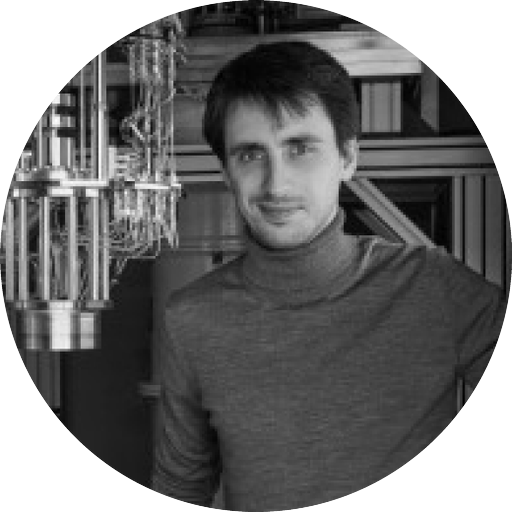
Théau Peronnin, CEO and co-founder of Alice and Bob, a company making fault-tolerant quantum computers using cat qubits, is interviewed by Yuval Boger. Theau and Yuval talk about what cat qubits are, why they protect against bit-flip errors, the kind of software that will be required to take advantage of these new machines, and much more.
Key takeaways
- Cat qubits use a bosonic encoding that autonomously suppresses bit-flip errors in hardware, so error correction only has to handle phase flips
- Because one error type is handled physically, the number of physical qubits needed per logical qubit drops sharply compared to standard superconducting approaches
- Software and compilers will need to be rebuilt around this asymmetric noise model rather than assuming symmetric bit-flip and phase-flip rates
- Alice and Bob is targeting fault-tolerant machines built on cat qubits rather than adding more error correction layers on top of conventional qubits
Read the full transcript on The Quantum Computing Report
Transcript
Yuval Boger: Hello, Théau, and thank you for joining me today.
Théau Peronnin: Hi, Yuval.
Yuval: So who are you and what do you do?
Théau: I'm Théau Peronnin. I'm the CEO and co-founder of Alice & Bob, and at Alice & Bob, we're building a universal fault-tolerant quantum computer to sell its computing power.
Yuval: Many companies have the goal of building a universal fault-tolerant quantum computer. So what is unique about the way that you're going about it?
Théau: Yes. At Alice & Bob, we're building a quantum computer using the well-known superconducting circuit platform. But within that sub-domain, we're kind of an exotic player. We're using what are called cat qubits, which are a special kind of superconducting qubit designed to protect against one type of error.
So basically, by design, cat qubits are stable against bit flips, and that allows us to design a fault-tolerant quantum computer with much less redundancy, with much less complexity or overhead. So it's really a sort of fast track to fault tolerance.
Yuval: Before we get into the technology, you mentioned a fast track. How fast is the fast track? When do you expect to have a computer that's tolerant against these common bit flip errors?
Théau: Yes, the target for Alice & Bob is to deliver the first logical qubit, or at least demonstrate all the key ingredients of it, next year. So it's very soon. We have already demonstrated that we can correct against bit flips, and now the challenge is to correct the remaining phase flip errors.
In quantum computing you have two types of errors, bit flips and phase flips, that are equally important to correct for. And so the real challenge for us is to truly escape decoherence, to engineer a system such that it remains quantum, it remains coherent, for a very long period of time.
And this target for us is, let's say, next year. And from there, well, it's about muscle. It's about scaling up the system size and designing a large-scale fault-tolerant quantum computer out of those elementary blocks.
Yuval: So could you give us maybe a popular science description of what cat qubits and cat states are?
Théau: Yes, cat states are named after the thought experiment of Schrödinger's cat. That's quite funny historically, because it was a thought experiment that was aiming at saying quantum mechanics is kind of out of touch with reality.
It was a thought experiment where you have a box, you put a cat in it, and you have some special trick that connects an atom to a mechanism that would trigger some explosive or poison that would kill the cat inside if, and only if, the atom decays through radioactivity. And so you could put the atom in a superposition, because it's a quantum particle, so in a superposition of decayed and not decayed.
And that would in turn mean that your cat, a macroscopic living organism, is in a superposition state. Obviously, that thought experiment is not what we're doing in the lab. No cats are harmed in our lab. What we have are cat states within a harmonic oscillator.
To put it in simpler terms, the idea is to have a harmonic oscillator, so a resonator, just like a pendulum, if you will, that is in a superposition of two sort of classical states, typically states with a well-defined phase and amplitude. Those are called coherent states of the harmonic oscillator.
It's really the closest to classical that you can get. And so a superconducting cat qubit is, in simpler terms, just a resonator, an antenna on a chip, where you have a superposition of two electromagnetic waves with the same amplitude but opposite phases.
And this is, in a very rigorous way, a cat state, hence the cat qubit name.
Yuval: And what makes it easy to correct for these errors if you do have a cat state?
Théau: So the breakthrough, made about a decade ago here in the Paris research ecosystem that we are a spinoff of, was to realize that those cat states can actually be stabilized.
They can be stabilized through a very well-engineered, exotic dissipation that exchanges photons two by two with the environment. So basically, you have a resonator that exchanges energy with its environment, but by pairs of photons. This is not something you find in nature.
You have to engineer it. And when you do so, and you go through the maths, you can see that if you start in one of those two coherent states, so let's say a given phase and amplitude, it's exponentially hard to switch to the opposite phase. And switching from one phase to the opposite one would be a bit flip in the Bloch sphere of the cat qubit.
And so it's really a paradigm shift, in the sense that whereas most players in the industry try to isolate their quantum bits as much as possible, what we're doing at Alice & Bob is actually trying to couple our quantum bits as much as we can to the environment, but through a very well-defined channel that is able to exchange energy, continuously replenishing the resonator with energy, while not exchanging information, while not inducing decoherence.
And this is really the trick that was developed by those groups and that we are pursuing at Alice & Bob.
Yuval: So your qubits are different from regular superconducting qubits. What about the gates? What about single-qubit or two-qubit gates? Are they similar, or are they also very different?
Théau: So here it gets a bit more tricky. What I described previously is what is called a biased-noise qubit, meaning a qubit that has very few bit flips but still has many phase flips. So it has biased noise in that sense. And the mindset of the error correction scheme we have at Alice & Bob is to correct for the remaining phase flips through redundancy.
And so in that regard, your error correction code is going to be a simple 1D error correction code, just to correct for the remaining phase flips. But you have to be able to assume that you haven't introduced any bit flips into the mix. So to answer your question, all the gates that you do at the physical level have to preserve that noise bias.
They should not introduce new uncorrectable bit flips. So for example, we do not have a physical Hadamard gate. The Hadamard gate, which is one of the most common gates in quantum computing, would actually change a bit flip into a phase flip and vice versa.
And so we cannot do that at the physical level. We're different in the kind of physical gates we can implement. We're limited to what are called bias-preserving gates, and through those we're able to run that error correction code. Then at the logical qubit level, we can have a universal set of gates and recreate the Hadamard gate.
We actually published this whole roadmap in, I believe, PRX in 2020. And our competitors from AWS also built on that vision of bias-preserving gates and cat qubits in their roadmap.
Yuval: So you mentioned single qubits and how you do two-qubit gates. How about the other infrastructure? Do you also need cryogenic cooling to basically the same temperature as regular superconducting qubits?
Théau: Yes, exactly. When you look at our lab, it's the same kind of infrastructure as any other superconducting circuit player, meaning that we have dilution refrigerators, racks of microwave electronics, FPGA boards to generate the signals.
The main difference is the level of complexity, or the number of physical qubits we're aiming for. Given that each of our physical qubits, each of our cat qubits, is already correcting for some of its errors, we'll need much less redundancy, actually orders of magnitude fewer physical qubits to build logical ones.
And that in turn softens the constraints on infrastructure a lot: in terms of cooling power, in terms of the number of microwave lines you have to input, in terms of the number of control electronics devices you need to build a large-scale quantum computer. So we're kind of the fast second in that approach, leveraging what has been done in the ecosystem in terms of scaling superconducting circuit platforms, while requiring much less overhead and much less complexity, so that it's definitely within reach of a startup, definitely a smaller player than some of our competitors.
Yuval: So one of the leading superconducting qubit vendors is obviously IBM, and they're planning to release a thousand-qubit chip. Now, given that you have dramatically different error correction, what is the equivalent number of qubits if you wanted to run roughly the same application on a thousand-qubit chip and on your chip?
Théau: So one application, one algorithm that you might want to run on some of our competitors' hardware, would actually be an error correction code, trying to build a logical qubit that reaches error rates of ten to the minus six to ten to the minus nine, which is the ballpark where we believe true exponential speedup can be demonstrated.
The numbers that are often cited for a surface code approach with usual transmons or usual superconducting circuits are typically about thirty times thirty physical qubits, so about a thousand physical qubits to build one logical qubit out of a surface code architecture.
Well, with the same level of assumptions, with cat qubits you only need to correct for one error. So you only need one line of physical qubits, so basically only thirty. The rough idea is that you're gaining a square root factor in terms of overhead.
This is a very rough idea, because then you have to talk about how you're going to do non-Clifford gates, how you're going to do magic state distillation, and all the exotic things that come on top of the error correction. But the orders of magnitude are definitely within this ballpark.
Yuval: Tell me a little bit about the company, if you can. How many people are you? What level of funding? When did you start operations? These kinds of things, please.
Théau: We started Alice & Bob in February 2020, my co-founder Raphaël Lescanne and myself. At that time, we had just published the first demonstration, in Nature Physics, of that exponential suppression of bit flips.
I believe at the time it was the first demonstration. And so we started Alice & Bob with a 3 million euro seed round with French venture capital firms. A bit more than two years later, we're now nearly 60, maybe 58, I believe, as of today. We've raised a total of 30 million in equity from venture capital firms, mostly French.
And we're definitely racing toward that technological breakthrough, what we believe to be the Sputnik moment of quantum computing: the logical qubit. This is our core goal, to deliver our first logical qubit on the cloud next year.
Yuval: I read someplace that IBM has invested about $1.5 billion until now in building their quantum program. I don't suppose you're also aiming for the square root of that to build your computer. So will you also need hundreds of millions of dollars to reach a maturity level?
Théau: I think it would be extremely arrogant to believe we can do it with much less. The thing is, we're picking our battles, just like any startup.
We have to go step by step and convince investors at each step that we actually deserve it, that we're the right team, that we have the right tech. And it's all about tempo, trying to time your growth with the opportunity, and not rushing too fast, too early, and crumbling under your own weight.
So definitely, we'll have to scale, just like most of our competitors before us. But we believe we're right on time in terms of tech maturity and growth of the company to deliver actual exponential computing power on time for our end users.
Yuval: A lot of the current software algorithms assume that there's noise. We're in the NISQ era, and so you have hybrid algorithms and all kinds of methods to say, "Well, I can't run a super complex algorithm that's pure quantum because of coherence and so on." Do you think that your machine will spur the development of a new class of algorithms, something that maybe doesn't have to account for all the noise of the existing first-generation machines?
Théau: You're right. This is definitely the mindset of Alice & Bob. We're not sure of many things, but what we're sure of is that once you reach a sufficient level of performance, once you have sufficiently good logical qubits, you can go for algorithms that are guaranteed to have exponential speedup.
And the other key ingredient we have in mind is the fact that classical computers are actually very good. So to beat them at a true real-world task, you need more than a quadratic speedup. And it's likely that you're going to require exponential speedup to actually demonstrate advantage in the decade to come.
So with those ideas in mind, the battle we picked at Alice & Bob is to really focus on escaping decoherence, delivering a platform that is both scalable and robust against noise, to first aim for those use cases, those algorithms that are guaranteed to have exponential speedup and actually require a very deep algorithm, a very large circuit depth.
Yuval: So to that end, are applications a focus of yours at the company, or are you relying on collaborations, or at this time is the main focus just getting the hardware done?
Théau: We're a hardware company. We're doing everything in-house, from the really low-level maths of the control theory of our qubits up to operating the devices, plugging them in, and coding the BIOS, if I may, of the quantum computer.
But we're not a quantum algorithm software company. For that, we're relying on partnerships with players that are focused on it and have very good expertise to leverage our hardware. So it's definitely the latter, in the sense that we're focusing on hardware, focusing on building a platform with which our partners can deliver value for our clients together.
And we're definitely open to more collaboration in that regard.
Yuval: As we get close to the end of our conversation today, I was curious: if you could have dinner with anyone in quantum computing, dead or alive, who would you want to have dinner with?
Théau: Ha. That's a tricky question. I'm going to answer on a personal level.
I joined physics early on because I was a big fan of the character Richard Feynman. And I mean, every talk in the field starts with a quote from Richard Feynman, from when he was helping his son, I believe, build classical computers at the time, and he realized it could be interesting to start playing with quantum mechanics.
I really would be curious to have his updated point of view on where we're going and what advances for science we can hope for from quantum computing, or quantum information in a more general sense, just as classical computing pushed forward statistical physics and a lot of fields of science in a very general way.
So that would be my go-to dinner.
Yuval: Fantastic. Théau, how can people get in touch with you to learn more about your work?
Théau: On our website, alice-bob.com, you'll find a way to contact us very easily. We're on most social networks. And obviously we're a company created by physicists for physicists, so we're still publishing quite a bit.
So stay tuned for academic papers, and you'll be able to meet us at conferences for sure.
Yuval: Well, thank you very much for joining me today.
Théau: Thank you, Yuval.