Summary
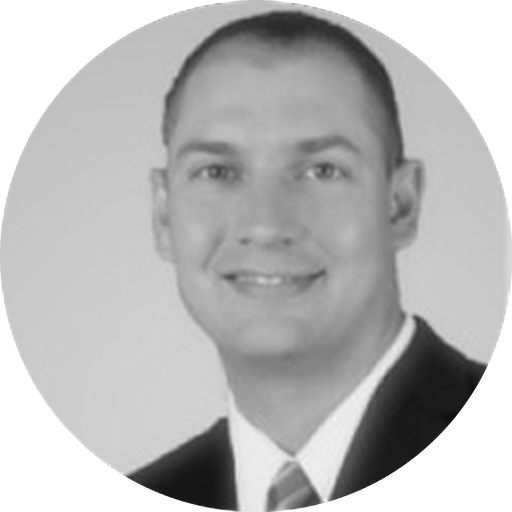
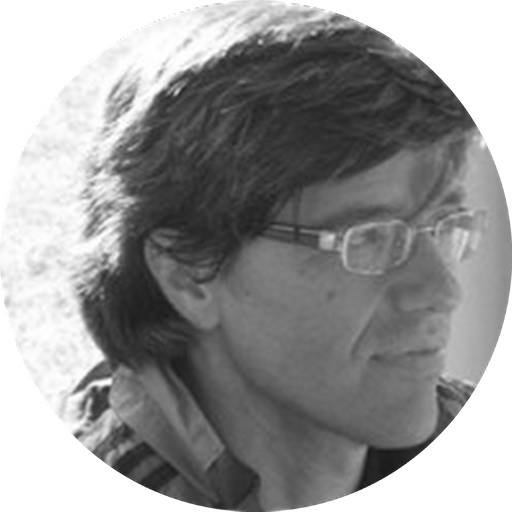
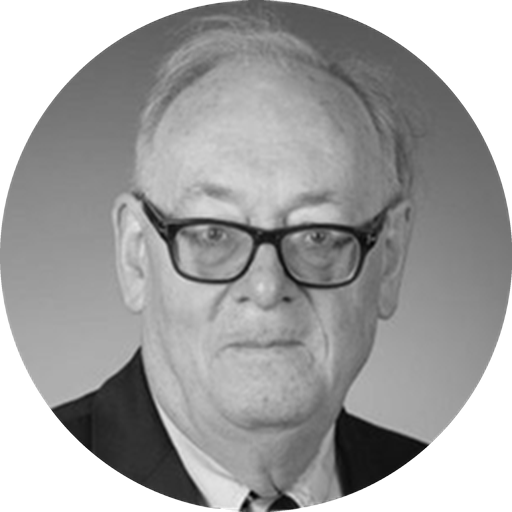
Prof. Peter Kogge from Notre Dame, Prof. Geraldo Ortiz from Indiana University and Dr. David Stewart, managing director of the Purdue quantum science and engineering institute, are interviewed by Yuval Boger. They talk about the new Center for Quantum Technologies, a multi-site NSF-funded research center, which commercial sponsors are participating in the center and what they expect to get from it, the diverse faculty and students that participate in quantum research, and much more.
Key takeaways
- The Center for Quantum Technologies is an NSF-funded hub spanning Notre Dame, Indiana University and Purdue, pooling faculty and equipment instead of each school building its own separate program.
- Commercial sponsors join the center expecting early access to trained students and applied research outcomes, not just a line item for basic science funding.
- The center deliberately draws faculty and students from a wide range of departments and backgrounds, treating quantum research as a cross-disciplinary effort rather than a physics-only specialty.
- Running a multi-site center raises practical coordination questions, from how credit and resources are split across three universities to how sponsors interact with researchers at different campuses.
Get the full transcript on The Quantum Computing Report
Transcript
Yuval Boger: Hello, David. Hello, Peter. Hello, Gerardo. Thank you so much for joining me today.
Gerardo Ortiz: Thank you.
David Stewart: Thanks for having us.
Yuval: So who are you and what do you do?
Gerardo: My name is Gerardo Ortiz. I am Professor of Physics at Indiana University, and I'm also Scientific Director of the Quantum Science and Engineering Center and Site Director of the Center for Quantum Technologies.
David: I can go. I'm David Stewart. I'm the Managing Director of the Purdue Quantum Science and Engineering Institute, and I'm also serving as the Industry Liaison Officer for this new Center for Quantum Technologies.
Peter Kogge: And I'm Peter Kogge. I'm a retired IBM Fellow, and I've been at Notre Dame for over 25 years as the McCourtney Professor of Computer Science, and I'm Director of the Notre Dame site of the CQT.
Yuval: Excellent.
So this sounds like a multi-university center, the Center for Quantum Technologies: Purdue, Notre Dame, Indiana. David, how did this come about? How did the center start, and how long did it take to set it up?
David: Yep. As you mentioned, it's a three-university partnership between Purdue, Notre Dame, and Indiana, and Indiana involves both the Bloomington and Indianapolis campuses.
This started almost three years ago. We got this idea in our heads, saw this opportunity through NSF, and really began working on it. We already had good ties across the three universities, being so close to each other in the state of Indiana, and started working on it from there.
It's been a somewhat laborious process, but we've made it all the way to the end. We just got the official word from NSF about a month ago that the full Phase One center has been funded, which will be for five years.
Yuval: Fantastic. Peter, and then maybe Gerardo, what is the division of labor between the various universities?
Do you all do the same thing, or is one university focused more, say, on communications, and another more on computing? How does that work?
Peter: In terms of research areas, we pretty well overlap. At each site, it's not just the director; there's a whole cadre of people from multiple departments who are interested in quantum.
A lot of them are drawing on preexisting collaborations across universities. So this isn't a "Hi, my name is…" It's more of a "We've worked together before, and there's now the opportunity to look at some really new and neat problems."
Gerardo: Absolutely. There are quantum strengths in all the universities, and the whole idea is to coordinate those efforts so that the whole is more than the sum of its constituent parts.
That's the whole idea. Of course, certain universities have strengths in certain areas, more in quantum communication, or quantum sensing, or quantum computing. But in the end, the whole idea is to coordinate these efforts to make a large impact at the national and international level.
Yuval: Approximately how many students and faculty in total are involved in this center?
Gerardo: In principle, there are more than 100 faculty members if you count across all the universities. And you can think that, on average, there are at least three students per faculty member working in the area. That, plus the postdocs, gives you an idea of the size of this enterprise.
It's certainly a very large set of people and talent involved in this enterprise.
Yuval: One of the problems often mentioned in the quantum industry is the lack of qualified people. Obviously a center like yours can educate and produce many people who could then flow into industry.
Do you have a degree in quantum, a quantum information science degree or something, so that people could say, "Oh, I've got a quantum degree, and therefore I'm even more qualified to work"? And if not, is there a plan to create a quantum-centric degree?
Gerardo: I can answer. Yes, this is a very important question, because we have to develop the quantum workforce of the future, okay? This is an extremely interdisciplinary thing. And indeed, at Indiana University Bloomington we already have a degree that started a couple of years ago, precisely with the intention of focusing on that workforce, okay?
So far it has been very successful, and we are getting more students every year. But this is not something only we are doing. Purdue and Notre Dame are trying to establish their own programs, and probably David and Peter can expand on that.
Peter: Sure. Literally just last week I had a meeting with our dean of engineering about what might be involved in setting up at least a minor in quantum, or a specialization in quantum, for our undergraduates.
David: Yeah, and I think Indiana's leading the way here as far as having an actual quantum degree.
Purdue's not quite there yet. Most of our quantum students get either ECE or physics degrees, along with a number of other disciplines. But Purdue does offer a quantum MicroMasters course that's all done online. It's about a year long, 10 months or so, a snippet to kind of get your feet wet.
Yuval: Interesting. I think Madison has some kind of certificate or one-year program in quantum. I guess the challenge is that there are so many different disciplines in quantum that it's hard to become an expert in everything. David, I wanted to ask you: beyond NSF funding, there are industry partners in the center.
What do you think they are hoping to get from sponsoring the center?
David: Yeah, absolutely. There's a significant value proposition. Maybe I should give a little background on the framework of the center, as many of your listeners may not be familiar with IUCRCs. That acronym stands for Industry–University Cooperative Research Center.
This is an NSF program that's been funded for about three decades now, and there are about 80 of these IUCRCs throughout the country. The way they function is that NSF provides funding for all the management and administrative costs. They don't actually give any dollars for research.
The research funding all comes from the members, who pay annual dues. And the centers are very unique in that the members actually select the projects that are done in the center. Our faculty across the three universities come together and pitch projects to our membership, which forms a board, and then the members collectively vote on the projects to decide which ones get funded.
So it's very unique in that the members have a really strong say in the research direction of the center. Back to your original question, there's significant value for the membership. One of the biggest ones we hear, and we've already talked about workforce, is access to talent, right?
One stat NSF always likes to cite is that 25% of IUCRC students eventually become employed by member companies. So you get a firsthand look at the wonderful talent we have in place. It can even serve as an interview before you bring someone in for an interview.
So access to talent is one. There's risk mitigation, because you're sharing those risks with like-minded peers in the field. Research costs are lower than hiring your own quantum engineer, because grad students, of course, are a little cheaper to fund than a full-time employee.
The universities also already have world-class infrastructure in place to do this type of research. You're pooling your research dollars with other members, and there's significant leverage there. At the moment, we have 1.1 million per year committed across NSF and our membership.
Our full membership fee is 50,000 annually, so that's a 22-to-one leverage right now on your return. Other things you get are networking opportunities with the faculty and students in the center, but also with the other members who are involved.
And everyone gets a royalty-free, non-exclusive license to any IP produced in the center.
Yuval: Could you disclose some of the members, some of the industrial supporters of the center? And, to the extent it's already been decided, maybe some of the projects you're working on?
David: Yeah, I'm happy to tell you all of our members. I don't want to leave anybody out, so I'll just name them all here.
We have Accenture, Air Force Research Lab, BASF, Cummins, D-Wave, Eli Lilly, Entanglement, General Atomics, Hewlett-Packard, IBM Quantum, Intel, the Naval Surface Warfare Center at Crane, Northrop Grumman, Quantum Computing Inc., Qrypt, and SkyWater. So that's our current membership, 16 total at the moment.
We're expecting a few more to be added, hopefully in the coming weeks and months. What was the second part of your question? I'm sorry.
Yuval: Whether you can talk about projects that have already been started or voted on.
David: Yeah. I'll let Gerardo or Peter talk a little more about the projects.
As I mentioned, we haven't actually had our first meeting with our membership, so we don't know for sure which projects are officially going to be funded. But I'll let them give a little more insight into our potential topic areas.
Peter: Sure, I'll give it a start.
When we started this effort, we came up with a book of potential projects, where we interrogated our local faculty about what would be of interest. We bounced those off our industrial contacts as we talked to them, to find out which ones excited them the most.
After that, we went back, looked for collaborations that formed naturally between sites in the CQT, and refined those. We came up with a list, I think, of about 16 projects that tried to answer their interests and matched our qualifications.
We bounced those off the industrial partners in some early meetings and got a sense of what they thought would be the most important ones, and those projects will be the ones we refine and present for the vote next time.
Gerardo: Yeah, these projects cover, in principle, a wide spectrum.
They go from quantum computing and quantum simulation to quantum hardware, to quantum sensing, okay? That's extremely important. Quantum materials, okay? We can tell you which projects were presented, but the reality is that there will be a final vote in that meeting.
That is what's going to decide it. The other important thing to mention is that this is not a fixed set of proposals. These proposals may evolve through the years, okay? It may happen that someone starts working on, let's say, quantum benchmarking on available quantum computers, okay?
And it turns out that this starts going in an extremely interesting direction and gets expanded, while another project, on quantum sensing, say, does not get voted in the next year. Then you have to start adapting the set of projects the center is going to work on.
Okay? So the point is that this is not a fixed set of proposals; it's something that will evolve according to the interests of the industrial partners.
David: Yeah, and I'd like to add to Gerardo's point there. He mentioned earlier that we have over 100 faculty across the three universities, right?
That gives us extreme flexibility to evolve and change to meet the needs of our membership as their needs evolve.
Yuval: I'm curious, Gerardo, and then maybe Peter and David, what are your personal research interests? What were you working on before the center started?
Gerardo: Well, I can start. Before the center started, I'd been working in quantum information for at least 20, 25 years, okay? I didn't start three months ago. I started while I was a staff member at Los Alamos National Laboratory, and I've been working since then on different aspects of quantum information and also condensed matter physics.
My research essentially covers two things: things related to quantum matter, and aspects of quantum information that have something to do with quantum matter, okay? For example, topological quantum matter, okay?
Topological quantum matter is of interest, for example, to Microsoft for building a topological quantum computer, okay? That's one of the applications, apart from the fact that topological materials may have some special functionalities, okay, for sensing and other things.
I also work in quantum sensing, trying to find ways to increase accuracy and precision in measurements, and also to extract additional information by entangling quantum probes, for example by developing entangled neutrons, okay?
Well, I could continue for a long time, but I think I will leave this to Peter.
Peter: Okay, sure. I've spent what seems like forever now in the world of supercomputing, massive parallelism, and alternative models of program execution and computation.
I just finished a book on that subject. My near-term interest is understanding which parameters of quantum computers are in fact going to be most suitable for real problems, particularly big problems where we can afford to spend the money to switch to something that's quantum-based.
Gerardo mentioned the benchmarking project, and that was one I put together. In fact, I was going to mention this: one of the neat things about these projects is that they make excellent fodder for attracting grad students, because they're well-defined projects. I can put that list in front of some grad students, and those who have an interest in a particular area will come and see me.
In fact, I have a new student from South Africa whose interest is in quantum, particularly quantum machine learning. He won a scholarship, so he's going to be working on CQT projects regardless of whether or not they're funded. So anyway.
David: Yeah, and I can go. I'm actually a chemist by training.
I spent several years working at the Air Force Research Lab on photonic materials, and have since transitioned into my role at Purdue, which is not as a researcher but more in business development and management: really helping our faculty find funding opportunities and build partnerships with stakeholders from academia, industry, and government, to help Purdue.
Yuval: David, I'm guessing that setting up the center was a huge effort. I can imagine herding the cats, so to speak, creating the proposal, going through the bureaucracy, and so on. So if I'm in a different part of the country, hearing this podcast, and I say, "Wow, I'd like to do something like this as well," what do I need to know to build a similar center, and would you be willing to help me if I were trying to do that?
David: That's an interesting question. NSF funds a number of these centers, but they don't fund multiple IUCRCs on the same topic. So unless one is significantly different from the focus of ours, we'll really be the only quantum one. I'd be happy to give advice to people outside the quantum field on how to go about this.
But the good thing is that we can expand if it makes sense for us. We can bring in other academic partners. There has to be some expertise that another university provides that we can't already cover with our 100-plus faculty members.
We also have minimum membership levels we have to maintain, and those increase as you add more partners. So while we're certainly open to exploring, and we'd love to hear from other people to see if it makes sense, it does have to be the right fit.
Peter: And I'd just like to amplify a bit on that in terms of helping other similar centers.
You absolutely have to have somebody like David, who is technically competent and works well with people from different sites. That's absolutely the number one requirement.
Yuval: I was listening to the list of sponsors, and I don't think I heard a cloud provider. What do you do about hardware, or about actually running quantum software?
Do you want to have a quantum computer at the universities? Are you expecting to partner with one of the large cloud providers? How does that work in terms of executing programs?
Gerardo: So you're talking about development of quantum hardware?
Yuval: Or of quantum algorithms on various types of hardware.
Gerardo: These are separate questions. Some of our members indeed have quantum computers, okay? IBM Quantum, for example, okay? And part of the task we have is essentially trying to see how to use those quantum computers in an optimal way, okay?
In some way, to help them improve, okay? There are also specific hardware elements being developed, okay? For example, at Purdue in the engineering school, okay? Hardware aimed at building better qubits. Can you build better qubits than the ones available in industry, okay?
Okay. So that's what concerns the use of the hardware. Now, of course, we would also like to develop our own technologies, okay? Our own expertise to develop other types, okay?
For example, we have groups here at IU working on two-dimensional ion traps, okay? In principle, these two-dimensional ion traps are developed for quantum simulation. But eventually, these researchers are thinking about converting them into a quantum computer, okay?
So those are the two aspects of the story. I don't know if Peter wants to add something.
Peter: Yeah, I do. One of the valuable things that came out of our discussions with industry was that a fair number of the people we talked to felt that, long term, what's important is not just quantum computers but quantum networks, clouds and networks of quantum computers, and how you design them not just for capacity but to be used collaboratively on problems.
So this is an area of quantum computing that's likely to be of real interest: how do we build quantum algorithms that span multiple physical quantum computers?
Yuval: We spoke about sponsors and grad students. Are there other people, at different levels of education, who might be interested in getting involved?
Gerardo: That's a great question. Indeed, graduate students are key to the center. They are not only the lifeblood, okay, of research, but they also have the possibility to interact directly with industrial partners and learn exactly what their interests and problems are through different channels.
For instance, through internships, okay? And also presentations. They have to present and update their research on a monthly or bi-monthly basis. That's kind of unique, because they learn what the real world out there is like, okay?
And they try to foster that interaction. This happens with undergrads and grads, but what's really interesting, and the reason I said it's a great question, is that this goes beyond college students, okay, undergrads and grad students. It also goes to high school students.
Very smart students who are hearing about quantum, okay, and want to learn and want to do research. I have two high school students working with me right now, okay? And I can tell you these guys are really bright, okay? One is 14 years old, okay, and he's learning about retrodictive quantum computing, okay?
Some new ideas. And it's unbelievable, okay, their learning and their excitement about these things. So yes, it is extremely important to get these young people involved in this enterprise at a very young age, because this is the future, okay?
This is the future, and this is where we are going to be in 20 years.
Yuval: Excellent. So if I'm a sponsor in a commercial organization that wants to get involved in the center, or a grad student looking for the best home for my research interests, what's the best way to reach out and learn about your center?
David: Yeah, you can check out our website, which is purdue.edu/cqt, or you can email cqt@purdue.edu, and we will certainly be in touch.
Yuval: Perfect. Well, thank you so much for joining me today.
Gerardo: Thank you very much.
David: Thanks so much for having us.