
Summary
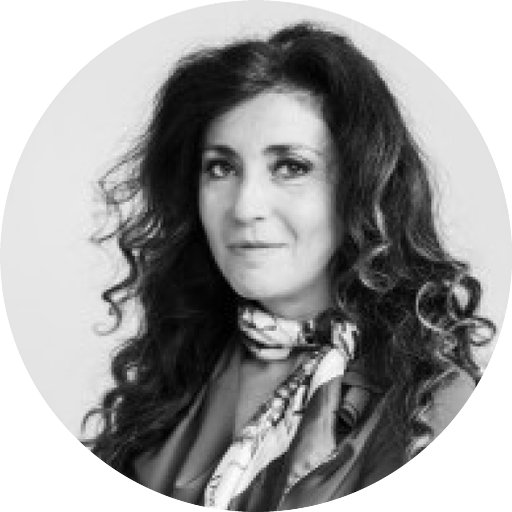
Sabrina Maniscalco, co-founder and CEO of Algorithmiq, a company that is bringing quantum to life and to life sciences, is interviewed by Yuval Boger. Sabrina and Yuval talk about Algorithmiq’s approach to achieving quantum advantage for life science applications using NISQ-era gate-based machines, her prediction for when quantum advantage will be achieved, the journey from Sicilia to Finland, and much more.
Key takeaways
- Algorithmiq is targeting quantum advantage for life science problems like protein interactions and drug discovery using today's noisy gate-based machines, not waiting for fault tolerance
- Their approach combines quantum hardware with classical computation and error mitigation techniques rather than relying on full error correction
- Sabrina predicts a timeline for when quantum advantage in life sciences could actually arrive, tied to near-term NISQ hardware improvements rather than long-term fault-tolerant roadmaps
- The company's path traces back to her academic career in open quantum systems, which shaped the noise-aware, hybrid strategy Algorithmiq now uses commercially
Interested in the transcript? Read it on the Quantum Computing Report site
Transcript
Yuval Boger: Hello, Sabrina, and thanks for joining me today.
Sabrina Maniscalco: Hi. Hello. Very nice to be here.
Yuval: Glad to have you. So who are you and what do you do?
Sabrina: So, I'm Sabrina Maniscalco. I'm a Sicilian who lives in Finland. I'm a professor of quantum information, computing, and logic at the University of Helsinki.
But most of my time, I'm CEO and co-founder of Algorithmiq. After many years working in research in academia, I decided to join the startup side. And so we co-founded Algorithmiq, and we are bringing quantum to life.
Yuval: What does that mean? What are you working on, and what are the applications of your technology?
Sabrina: Yes, we are working on the development of quantum algorithms with a specific focus on life sciences. We are talking about quantum algorithms for near-term quantum computers, so not yet for fault tolerance.
Of course, we are going in the direction of fault tolerance, but we want to use the computers we have now, and the way in which they are growing, with the noise, which is one of the main obstacles causing errors. Specifically, we want to develop algorithms and software to tackle problems in the life sciences.
Drug development and discovery is one of the main lines. But of course, in order to reach this milestone, there are other intermediate steps that need to be achieved. For example, the demonstration that quantum computers with our algorithms can perform quantum chemistry simulations that cannot be performed by any classical machine.
So obviously, this is the first goal, and it will be the stepping stone towards industrial applications in DDD, in drug development and discovery, and in the life sciences in general.
Yuval: What kind of computers do you use? Do you use gate-based quantum computers? Do you use annealers? Or maybe it is just quantum-inspired algorithms that you're using. Could you tell me a little bit about the technology, please?
Sabrina: Yes. We are using algorithms for gate-based quantum computers.
What is our differentiator, what makes us different from other startups working in a similar field, is the development of what we call an informationally complete readout strategy. This is maybe quite abstract and detailed lexicon, but basically what we mean is that we have developed a way to read out quantum computers that makes algorithms for very complex simulations really scalable.
And this is the reason why we believe that we can achieve a demonstration of useful quantum advantage in the very short term, actually. It's one of our goals for the next year.
Yuval: And what kind of problems can you solve? Are these problems something that people cannot solve today classically, or is it more that we're proving the concept now, and in a couple of years we'll be able to solve problems that could not be solved classically?
Sabrina: That's a very good point, because we see that many algorithms have already been developed for near-term quantum computers that work as proof of principle. We can demonstrate, in experiments on the real machine, that these algorithms might potentially work as we become able to scale up the devices and also protect them from the noise.
But of course, these are just proof-of-principle experiments. What we are working on at the moment, and what we have discovered very recently — I actually announced this at one of the major conferences, in Vienna — is that if we use the strategy that we have developed, then this is something for which we do not need to wait several years.
So what we are tackling are not specific proof-of-principle experiments on molecules, but molecules that already have a complexity such that they are very difficult to tackle classically. This is our current major R&D effort. And of course, at the same time, we are collaborating with Harvard Medical School and with Lawrence Livermore National Laboratory in order to identify use cases more related to the drug development and discovery part, for which, in the longer term, so in a couple of years, we will be able to apply the same strategy.
If you want, it's really like a combination of tools that are optimized to all degrees, all pieces, in order to work on these very limited computers. I always make an analogy with the Apollo Guidance Computer. The Apollo Guidance Computer was a device that, if one looks at the specs, had four kilobytes of RAM.
And four kilobytes of RAM is nowadays not even sufficient to store a five-qubit density matrix in double precision. And it's a computer that was able to send men to the Moon and back. This is because the code that Margaret Hamilton developed was so optimized in all aspects that it allowed a very limited device to perform and to achieve something that is one of the major successes and milestones in human history.
Yuval: Is there a particular type of drug that you are working on, for instance, focused on cancer or focused on something else, or is it more of a generic effort at the moment?
Sabrina: Yes, that's a very good point. What we thought is that the very first effort has to be concentrated on the demonstration that we can actually run algorithms on existing devices that are good for quantum chemistry simulation.
This means basically calculating binding affinities, binding energies, and therefore demonstrating the core, to then apply it to the drug development and discovery use case. We do have some examples of use cases, but mostly this will come only once we have established partnerships with pharma companies and identified with them which is the best strategy.
Among the effects which are very difficult to analyze at the moment, and for which we think quantum computers will have an advantage, is the effect of the solvent. Very often, when one considers drugs, and in particular small molecules binding in the binding pockets of proteins, one neglects a number of realistic scenarios.
For example, the fact that water is generally the usual solvent in which these small molecules are immersed, and it very often plays a very important role in the binding. These are the types of calculations that we are analyzing at the moment.
And we believe that these are examples for which the full power of quantum computers can be exploited to the best.
Yuval: How long has the company been active?
Sabrina: The company is two years old. We have been working in stealth mode.
We have created a team of experts which includes not only quantum computer scientists, but also quantum chemists, computer scientists, complex quantum systems theory experts, and in general mathematicians, because, as you know, this is a very interdisciplinary field, and therefore it is necessary to have top-level expertise from several disciplines in order to tackle what is still the holy grail of the field.
That is really to prove useful quantum advantage. And this is what we are extremely excited about, because that is precisely what we believe we can do differently. We have really understood the ingredient that allows us to change the perspective and unlock the power of quantum computers.
Yuval: How do you feel about pharma companies trying to do the same thing?
Because pharma companies certainly have the scientists, they have the budgets, they know what targets they're looking for. So you could make the case that they just need a few quantum scientists to get started. How do you compare a focused startup like Algorithmiq versus a quantum activity within a large pharma company?
Sabrina: Well, this is a very good point. In general, what is important at the moment is really not to underestimate that the missing ingredient for achieving quantum advantage for electronic structure problems in general is really very fundamental. It's not, let's say, a technical one.
Of course, there is the aspect of technical improvement of the machines, and clearly all algorithmic companies are working hand-in-hand with the hardware companies. But it is a very fundamental problem. I want to explain it, because I think it's important to understand what the issue is.
The whole of quantum information theory and quantum computation, from the algorithms and theory side, was developed to handle systems which were either ideal, so in the complete absence of noise and errors, or alternatively, based on the assumption that we could measure the full state of this complex molecule, okay?
The full quantum state of the molecule. Now, unfortunately, this is impossible. We know that this is an exponential problem. We will never be able to access the full state of a complex molecule. Therefore, any measurement strategy that tries to do so immediately faces a very strong roadblock.
What is needed is to understand how to extract the relevant information from a redundant object. The full state of a complex quantum system is very redundant; it contains way too much information. But within this information, even in the presence of noise, there is hidden the quantum power, the resource that you need to extract.
So this is a very fundamental problem, and in order to tackle it, you need a team with a very strong academic and research background in quantum information theory. It is not easy to create this team. In my opinion, the best way of creating such a team is to start from academia, because of the networking and the connections, and not the other way around.
Of course, this will change as the progress and the ecosystem evolve, and as these computers become commercially useful. But at the stage we are in, this is the key block, let's say. And I think that this is what we have been targeting.
Yuval: You mentioned that you're running on gate-based computers, and there are various approaches to gate-based computers. Some have more qubits, some have better connectivity, some have different noise characteristics. Do you compare them and try to find the best computer for a particular program, or are you just running on a simulator, or on one particular vendor that you like?
Sabrina: Yes. Our algorithms are hardware agnostic. But of course, that does not mean that they cannot be optimized, and indeed, they are optimized based on the different connectivity of the different devices. We don't do just simulations; first of all, we demonstrate on real devices, whether they are trapped ions or superconducting qubits.
Until now, we have not been using photonic systems, but mostly superconducting qubits and trapped ions. And we demonstrate the proof of principle of our algorithms. At the moment, we are collaborating with a major hardware provider in order to implement our measurement strategies and demonstrate quantum advantage for chemistry.
Yuval: One would think that this approach could go beyond just pharma, right? You could maybe apply it to material design, or to solar energy, or other things. First, do you agree, and second, have you made efforts to work in adjacent fields?
Sabrina: Yes, I definitely agree. At the same time, we have chosen quantum chemistry because we believe that, on the one hand, it is something that has a very strong impact in the life sciences, and at the same time it is a class of problems for which we have expertise and for which we believe we have a clear benchmark.
We have in-house quantum chemists who are developing state-of-the-art classical chemistry techniques, and we obviously work with them on the comparison, because quantum advantage always means comparing with the best-in-class classical algorithms. However, we have chosen to focus on purpose, because different use cases in different fields — materials versus solar panels versus chemistry for drug development and discovery — have something in common, but the details are such that focus is needed in order to tackle all the optimization problems that naturally arise.
Subsequently, we of course plan to grow into the space of everything that has to do with electronic structure properties. But this is not the initial focus. So there could be a future in which we also consider materials, and therefore the design of new materials and all the applications in that framework.
But this is not happening now, and it is not happening in the short timeframe either, because we believe that focus is needed, and because we want to become a quantum biotech in the future.
Yuval: The million-dollar question is always about the timing for quantum advantage.
Based on the status of your company, your development, the hardware, and so on, when do you think a pharma company could say, "Wow, this is something that we could not have done classically, and quantum is really the only way to achieve these results"? Is it this year? Is it next year, in 2023?
When do you think it will come?
Sabrina: We believe, and we have reason to be very optimistic, that applications useful for pharma companies will be developed within 2025. It's a very short timeframe, but it is based on our recent results and on the successful development of our proprietary strategy over the last couple of years.
Yuval: And you said 2025, right?
Sabrina: Mm-hmm.
Yuval: Excellent.
Sabrina: For pharma, yes.
Yuval: I'm curious about your personal journey. As you mentioned, you're originally from Italy. How did you end up running a company in Finland?
Sabrina: It's never planned. You know, life is so full of unexpected turns and events.
To be honest, I never really planned many years in advance what I would be doing. After finishing my PhD in Italy, it just happened that I started to collaborate with scientists working on open quantum systems. My expertise is really noise and errors in quantum devices, so I've been studying these for many, many years.
I got offered a postdoc position, first in Bulgaria, then in South Africa. It was very funny, because going from South Africa to Finland is really like going from the South Pole to the North Pole. Eventually, I got my first professorship in Edinburgh, in Scotland, and I moved back to Finland as the chair of theoretical physics in 2014.
And then I remained in Finland as a professor. I had my own group and so on. Why Finland? There is no other reason than that it just happened. It was part of my life. It just happened, as many things happen. And I'm extremely happy to live in Finland. It's a fantastic country. I find it one of the most civilized countries in the world.
It's beautiful to live here, and I plan to stay. In general, it's quite the opposite of Sicily. I would say that there is nothing in Europe more opposite to Sicily than Finland, from many points of view, almost all of them.
Yuval: Thank you for sharing that. Sabrina, how can people get in touch with you to learn more about your work?
Sabrina: Well, certainly, one way is the email address info@algorithmiq.fi. And then of course, via LinkedIn. That is the second way.
Yuval: Wonderful. Well, thank you so much for joining me today.
Sabrina: Thank you. It was a pleasure to talk.