Summary
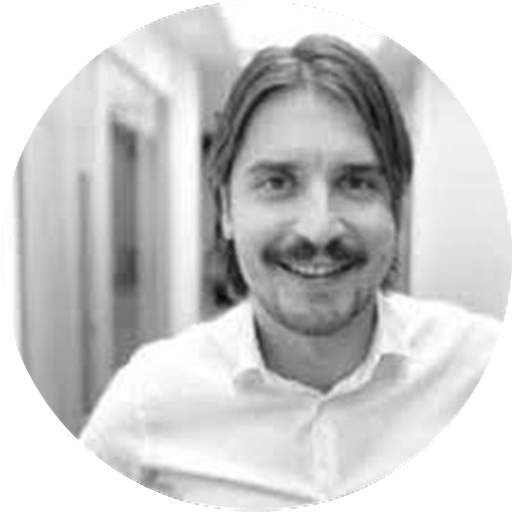
Max Sich, co-founder and CEO of Aegiq, a quantum photonics company, is interviewed by Yuval Boger. Max and Yuval talk about Aegiq’s first product, a single-photon source, and its potential applications, their business model, the impact of governments in quantum – beyond funding – and much more.
Key takeaways
- Aegiq's first commercial product is a single-photon source rather than a full quantum computer, letting the company generate revenue years before a fault-tolerant machine exists.
- Single photons have uses outside computing, in sensing and networking, so Aegiq can sell into multiple markets instead of betting everything on one application.
- Building a component-level product lets a photonics startup earn revenue on a shorter timeline than companies trying to sell complete quantum systems.
- Government involvement in quantum goes beyond grants and funding, extending into procurement decisions and setting technical direction for the industry.
Read the full transcript on the Quantum Computing Report
Transcript
Yuval Boger: Hello, Max, and thanks for joining me today.
Max Sich: Hello. Thank you so much for having me.
Yuval: So who are you and what do you do?
Max: So I'm Max. I'm CEO and co-founder of Aegiq, and at Aegiq we are accelerating adoption of quantum technologies. We do so by bringing the most scalable stuff that's out there, primarily photonics, and we help people find synergies with their existing business in communications, computing, and sensing.
Yuval: How did Aegiq, the name, come about? I'm curious.
Max: We were running an internal competition, and the task was to name a company starting with the letter A, so it's always at the top of the list. It also comes from the word "aegis," which reflects the security aspect of our approach.
Yuval: Perfect. You said you're helping companies leverage quantum. You're not a consulting company, right? You're a product company, I believe.
Max: That is true. But you need to help people use things as well. If you're a commodity company, you make user manuals and then help people read them. If you're a quantum company, you have to take a lot more care about it, and it's also a discovery process, for us and for people.
Different products and different services are at different stages of understanding by people and users, so they require different approaches.
Yuval: Excellent. And what is the product that you're developing?
Max: We're building a suite of tools and building blocks for various quantum applications, primarily with photonics.
The first thing we're doing is deterministic single photon sources, but also ways to manipulate light and turn it into more sensible systems, such as communication, for example. It's basically a key thing, a kind of linchpin, to build any quantum links and exchange any quantum information.
Yuval: You mentioned a single photon source. I guess the name implies that it's a device that can emit a single photon, but why is that a good thing? What is it used for, and what's so special about that single photon?
Max: Because it's quantum. Quantum 2.0, or whichever way we call it, is anything to do with a single atom, a single photon, a single spin, a single electron, anything.
You need to have that entity at hand and control it in order to leverage quantum theory to your benefit in building a technology. And having a single photon source that's controllable, so deterministic, means we know when we have it and we know when we don't have it, in advance. That allows you to build a range of applications, really.
You can build entanglement with this. You can build quantum pair sources, again deterministic. We'll build larger states as well. So it takes you into proper quantum.
Yuval: Let's try to dive into some of these so I get a better understanding. Let's, for instance, talk about key distribution. Why would a single photon source be good for key distribution? Isn't more better? I mean, if I had more photons, wouldn't that be better for key distribution?
Max: When I talk about this, I say exactly the opposite: less is more. It's the same with quantum computers, right? Is it not better to have more electrons inside a computer? Well, it turns out not exactly, because then you don't exploit the quantum properties, and that's the ultimate thing.
Having a single photon opens the door to entanglement, to controlling entanglement, and therefore to really building that capability. That's in generic terms. If you look at specific implementations, the best comparison is maybe with the most basic quantum key distribution protocols, such as BB84, which has been widely implemented using techniques such as weak coherent pulses.
You take a laser pulse and filter it down to low numbers, and then it turns out that it doesn't work as you want, because it has a different statistical distribution. So you have to play tricks, build decoy states, and hide the fact that it's not a true single photon. You lose a lot of bandwidth just because it's not real.
Yuval: So is a single photon in key distribution just there to ensure that if someone eavesdrops, they basically take your photon away and it doesn't get to the other side? Is that part of it?
Max: That's part of it, of course, and that's ultimately the theoretical background to it. The closer you can get to a true single photon, with nothing else, no other noise, the better your system is.
Yuval: In terms of hardware, first, where are you in the process? How large is the company? Do you have funding? Does the product exist yet? Fill me in there if you could.
Max: We started at the end of 2019. To date, we've got our seed round funding with some really good venture capital firms that really focus on deep tech.
We've also received five UK government grants by now, where we collaborate with others on R&D projects. That was of great benefit because we could grow our team, which is now quite substantial for our age and stage. It also unlocked a lot of the supply chain for us, and end-user engagement as well.
Developing technology, and hardware especially, is expensive if you want to build it all yourself, so we require foundry services and other services to ensure that we can put it together. And we're gearing up towards the end of this year for something. I'm not going to spoil the moment, but I'm just saying that there will be something.
Yuval: How large is a single photon source device? Is it tiny? Is it a fridge? What's the physical size of a device that generates a single photon?
Max: The device itself is based on something called quantum dots. It's a tiny lump of atoms inside a semiconductor structure, on its own.
Now, to operate it, you do need to cool it down, so we're currently talking about tabletop boxes, or a rack-mountable unit that has all of it: control, drive, readout. Well, the readout you have in the fiber. But altogether, it's not a fridge the size of a building, and it's not the size of a smartphone either. It's somewhere in the middle.
Yuval: And is the business model to sell these components so they're embedded into someone else's product, whether for computing or communication, or is the business model different?
Max: The business model is to help people use quantum things. These things are helpful primarily for people who are doing research in quantum information science.
So we're helping them do better science. But we're also developing other systems that help people solve more complex problems and build better businesses overall. I can't talk much about these right now, but these are all things that are happening. This is the premise.
So for us, it's about enabling that and making it better, not specifically focusing on a particular product. But single photon sources are really a unique thing, apart from the other things we have, and it's where we started. It's something people really, really need to build large-scale applications in a lot of places.
Yuval: If your technology can be used for computing, communications, and sensing, and I'm assuming you've started speaking with some early customers about that, what's your take on which of these markets is going to take off first? There's been a lot of hype about computing, but is it really going to be sensing or communication that leads in the near term?
Max: I wouldn't break it down in this particular way. I would rather break it down by the scale or the scope of systems. The things that are going to pick up first are smaller, isolated systems that have a limited interface into our digital infrastructure, and that's already happening.
You see some sensors being deployed. There are some experimental quantum computers available in the cloud, or you can buy them. Same with communication systems: again, it's isolated links that operate for a particular purpose and some niche applications. That is the first stage. So they do happen simultaneously, in fact, and they help each other.
It's not like one is sitting there while the other is booming. The next stage, or the second generation, is when we start seeing global systems that are still isolated. That's when it gets bigger. You're slowly moving away from high-value manufacturing into mass production, until we reach the quantum internet, where it's mass production and a very well-established technological set.
So in that sense, that's the way we approach or view it. Computing probably relies more on a particular breakthrough, so it's less linear in development, whilst communications and sensing are probably a little easier to anticipate in terms of how they develop.
But roughly, they follow the same path.
Yuval: Some say that a reason sensors could take off sooner is that they don't require very many qubits or very many components. You could build a very useful sensor, unlike a quantum computer where you say, "Oh, I need thousands or hundreds of thousands of qubits to do something that I couldn't do today in a meaningful way." You need a whole lot less for sensors.
Would that be an accurate statement?
Max: To some extent, but then again, it's within the remit of a small, isolated system. You make an improvement to a particular sensing technology, but you haven't changed the way you deploy the sensors, and you haven't changed the way you read out and process information. So it's just a little taster of what it could be.
Same with communication, for example. You can build a very secure link right now. QKD is working. There are a number of systems out there being deployed. That doesn't mean that's the way it will be scaled into the next generation of technologies.
Yuval: Is there a significant software component to the products you're building, or is it primarily hardware?
Max: We're building from the ground up, so a lot of our current focus is on the key hardware blocks that enable it. But software is an increasingly large chunk of the work being done, where you inevitably have to build interfaces with the digital infrastructure we have, the processes we have, and human interfaces.
So that is a huge amount of work as well.
Yuval: In terms of the people who work at Aegiq or the people you're hiring, do you feel they need to come from substantial quantum backgrounds, or are they just good software engineers, good hardware engineers, good physicists, optical engineers, and so on?
Max: It's a mix.
We'd really like to see a mix of experiences and cultures, primarily. We do need a core of people who have a really deep understanding of quantum physics, quantum theory, quantum mechanics, and quantum information theory. But at the same time, there's a lot of work that needs a more conventional skill set, so to speak.
So we need engineers in optoelectronics, optomechanics, electronics, and software, as simple as Python. Not that Python is too simple. It actually gets really complicated.
Yuval: How do you see the role of government in developing quantum technology? Other than funding and providing grants to businesses like yours and others, do you think governments have to play a bigger or different role than just funding?
Max: They are stimulating it and recognizing the fact that quantum, or the set of quantum technologies in general, underpins the future of their countries for the next couple of decades, for sure. They want to have a hold of that technological set overall. That's their primary motivation, really.
They want to lead the pack among countries. So they drag everybody in, and they put money on the table to help drive it. The other important aspect, which quite often gets overlooked a little at this stage, is regulation.
It's not there right now, but it's coming. It will always be there. Quantum has a chance of being less regulated, or a risk of being more regulated. That is probably the most important role of governments, one that will always be there irrespective of funding or procurement contracts: regulation, or requirements for people to, for example, use quantum as a government contractor of some sort.
So it's indirect, but super important, and this is where a lot of care needs to be taken by governments, including in the relationships between countries. For businesses, it's also critical that there is good liquidity in capital, talent, technology, and intellectual property.
And if it's not there, we're all a little bit slower in development.
Yuval: As we get close to the end of our discussion today, I'm curious about your personal journey. How did you become CEO of a quantum company? Where did you come from academically? What was your path to where you are today?
Max: I'm a quantum physicist by training, an experimental quantum physicist, but I also did a degree in economics and finance. So I was always somewhat inspired by entrepreneurship and its challenges. At some point, I just felt it was a great time to do it, to switch and start building something greater than just the awesome science we were doing.
That's how it started. Then I called my friends, who are now my co-founders, and we've pulled through a lot of hard times together. You always read that the team is important, and everybody says that, but I can't say enough about how important it is.
Yuval: Excellent. So Max, how can people get in touch with you to learn more about your work?
Max: I'm pretty active on LinkedIn, and I check my inbox there regularly, so that's the easiest way to reach me. Also check our website. There are some ways to get in touch there as well.
Yuval: Thank you so much for joining me today.
Max: Well, thank you very much for a very interesting chat, and I hope everybody enjoys it.