
Summary
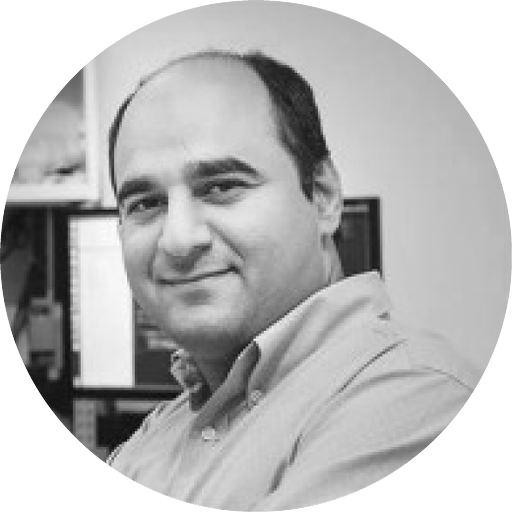
Alireza Najafi-Yazdi, founder and CEO at Anyon Systems is interviewed by Yuval Boger. Alireza and Yuval talk about Alireza’s full-stack quantum computer company that tackles everything from cryogenics to qubits to software, how to keep quantum computers running without attaching a technician to them, and much more.
Key takeaways
- Anyon Systems builds its own cryogenic refrigerators, qubits, and control software instead of outsourcing any layer of the stack
- The company's core design goal is a quantum computer that can run unattended, without a technician babysitting the cooling or calibration
- Owning the full stack lets Anyon trace problems across hardware and software layers instead of chasing multiple vendors for a fix
- Reliability and automation, not just qubit count, are treated as the metric that decides whether a machine can leave the lab
The full transcript is available on the Quantum Computing Report site
Transcript
Yuval Boger: Hello, Alireza, and thanks for joining me today.
Alireza Najafi-Yazdi: Hi, Yuval. Thank you very much for the invitation.
Yuval: So who are you and what do you do?
Alireza: Well, I'm Alireza Najafi-Yazdi, and I'm the founder and CEO of Anyon Systems. We are a quantum computing hardware company located in Montreal, and we also have some satellite presence in the Waterloo region in Canada as well.
Yuval: And I apologize, but I wouldn't say I'd never heard of you before, but I only heard of you very recently, and then I found out that you've been active in the market for a number of years. Is that by design, or is it just my ignorance?
Alireza: It is to some extent by design. We actually started in 2014, and officially launched the company in January 2015.
In that regard, we are one of the oldest companies in the quantum computing market. I think older than us are perhaps Rigetti, by a few months, and maybe D-Wave, by quite a few years. It was around that time that John Martinis and his team joined Google and the Google Quantum effort started, and IBM also started their recent superconducting effort.
So yeah, we're almost as old as the industry is.
Yuval: And I think you're building a complete system, both the hardware and the software and everything in between, using superconducting qubits. Is that correct?
Alireza: That is correct. We're pretty unique in some aspects, and that is we build every major component of a superconducting quantum computer in-house.
We build our own dilution fridges, which I've noticed shocks many people. They don't expect a quantum computing hardware company to be able to build its own dilution fridge. We build our own control electronics. We build and develop our own firmware stack, and we kind of stop right at the SDK. That's when we hand it over to the client and other partners to build compilers or sophisticated algorithms and whatnot.
So we're primarily focused on the hardware and the periphery of a quantum processor.
Yuval: That sounds like a major undertaking. You know, I think there are very large companies who try to do full-stack solutions. Can you give me a sense of the size of your company, how many people or what kind of funding makes it possible to do a full-stack solution?
Alireza: Sure. We're not too large a group. We're 25 people, but we've been at it for quite a long time now. It's been more than seven years; in December, it's going to be eight years of working on this project. So we have a nimble and very efficient team, but we also took some time to build all this stuff.
It took time.
Yuval: And I think you have a quantum computer that actually works, and that you've sold a few. Is that correct?
Alireza: That is correct. We have a system that we built for DRDC. This is a Canadian defence research establishment, part of the Department of National Defence.
That's a six-qubit machine; that's the extent I can disclose. And we are now in the process of building a second unit. It's actually a very nice commercial unit for data centers, and it's going to be installed sometime next year, hopefully in the first half of next year, at Calcul Québec, which is a supercomputing center here in Canada that serves a number of universities.
So yeah, we're in the process of building that system, and in the first phase of that system, we're going to install a 12-qubit chip. As I speak to you, almost all the major hardware components are either on the floor or being integrated, so we're going to start testing in the next couple of months.
Yuval: What makes your system different or better than other quantum computers, and specifically other superconducting quantum computers?
It doesn't sound like you have more qubits. Are they better qubits? Are they better connected? Are they designed for a different use? Help me understand the differentiation, please.
Alireza: There are two things, Yuval. Here at Anyon, our activities follow two prongs. One, we have our own internal R&D that is focused on a very particular type of architecture in superconducting qubits, a novel qubit architecture that we're pursuing.
The other stream of our work, for the time being, focuses on delivering noisy intermediate-scale machines, NISQ machines, to data centers and early adopters. So these two machines that I talked about feature NISQ architectures. They are transmon qubits.
They are tunable transmon qubits with tunable couplers. To some extent, it's similar to the architecture that Google has followed; we follow the same philosophy. In many aspects, we like that philosophy very much. Of course, on the control electronics level, the cryogenics level, and even on the quantum processor, there are certain things that are very unique to ours.
What we have been striving to achieve is higher gate fidelity and minimal crosstalk. On the crosstalk, we have really state-of-the-art performance metrics. You could put the crosstalk, literally speaking, at zero. And in terms of gate fidelities, we're consistently getting performance metrics that you could call among the top three players in terms of qubit performance, and they're getting better and better as time goes on.
And scaling up the number of qubits is no longer an issue. We can scale up to a few dozen, let's say sixty or seventy qubits, with the existing platform that we've developed. It's just a matter of the client's check size, because building these machines costs a lot of money and somebody has to pay for it.
Yuval: I was looking at the website and some of your press releases, and it sounds like two of the customers that are mentioned are government or defense-related customers. I'm guessing that these customers are not using it on a public cloud like Braket or Azure. Is that by design, or did it just happen this way that the first two customers are government customers?
Alireza: Part of it happened by design. It's just a philosophy that we have in terms of how an eventual quantum computer would be used. We think a quantum computer is going to be a hardware accelerator, sitting next to a classical high-performance computing infrastructure. So I mentioned Calcul Québec and the supercomputing center.
We're very excited because this machine that we're building for them is going to be directly coupled into their existing HPC fabric, to Narval, which is the largest public supercomputer here in Canada and the 81st largest supercomputer in the world. So there's a lot of interesting integration work being done between the HPC and the quantum computing infrastructure we're building.
Because of that, putting a machine on the cloud and having a TCP/IP API call is just slow. We don't think that's how a machine would eventually be used. We understand these are smaller-scale machines, perhaps mostly for education and trying proofs of concept.
But nevertheless, you want to really move in the right direction. So that's why we didn't go directly to the cloud. And also, when it comes to cloud, the business case has not been there, or at least I'm personally not convinced about the cloud yet. Building a machine costs millions and millions of dollars of capital, and then you put it on the cloud and charge the client a few cents a shot.
And I'm not sure if you'd get a return on investment anytime soon. At the end of the day, we're a commercial company, unit economics matter, and that's why it so far has not been commercially attractive enough.
Yuval: How about uptime? When I look at computers on the cloud, they're not up 24 hours a day.
They have limited, or sometimes larger, windows of operation. When you deliver a computer to a customer—
Alireza: Yeah…
Yuval: —do you have to deliver a technician that tweaks the qubits every day, or how are these computers maintained?
Alireza: It's a very good question, and this is one of the things that has been the subject of significant activity here at Anyon.
We've been working on developing automated calibration systems for, as you said, the tweaking. Yes, you need some calibration. You need regular calibration, perhaps every 24 hours or even a shorter time interval, and you don't want a technician next to the machine. You want this to be done automatically.
So a lot of quantum control concepts and software engineering concepts have gone into building the infrastructure to make sure that these things can be maintained without direct intervention by sysadmins or our technicians. Particularly for this one that is going to the supercomputing center, there are a lot of interesting requirements in terms of maintaining it.
The uptime should be 24/7 for long periods of time. So far, we've run our machines for months and months without a problem. Typically, we just have to warm up to swap in a new generation of chip. So we've been able to keep these machines up for quite some time.
And we'll continue to monitor and learn from that experience.
Yuval: Given that you are a full-stack company, do you need any help from any other industry players? I mean, if you were controlling the quantum computing industry, what would you have people do that they're not doing today to help you move faster?
Alireza: Well, we're definitely not controlling the industry, but we have been controlling our fate and our technology, and that's always been the idea. But there's a lot of room for collaboration. As I mentioned to you, we're so focused on the hardware that we have strategically decided to let others take care of algorithms, perhaps compiler optimization, things of that nature.
I think this is a great area of collaboration. Benchmarking is another great area of collaboration. Those who have a particular expertise in benchmarking and want to go from one hardware to another are more than welcome to talk to us, and we would love to hear from them as well.
That's another area of collaboration. And in between, there are a lot of components that either we don't make or we don't want to make anymore, that we'd love to see a supply chain for. A good example is the dilution fridge. When we started in 2015, there were just two companies at the time that you could call commercial.
One was Bluefors, and the other one was Oxford Instruments. And we were not sure, if they were bought out by our competitors, by these big giants, what our fate would be. So we decided at the time to have our own dilution fridge systems. It made strategic sense, and also for the long term, if we want to go to larger and larger numbers of qubits and build bigger and bigger systems.
We're probably going to keep some of these key equipment and key components internal and build them internally. But we're always on the lookout to see what others can do and take some load off our shoulders.
Yuval: And in terms of applications, do you feel that your computers are best for one particular type of application, like optimization or chemistry or something else, or is it really the entire spectrum for you?
Alireza: We build what are called universal quantum computers. These are gate-based machines, and in theory you can run any algorithm you want. You're just limited by the coherence time of the qubits and the gate fidelity, the same as if you were running on, let's say, IBM's or Google's machine. That being said, a good question is: what's the best application for a quantum computer?
There are also some companies following application-specific quantum processor architectures, and an interesting discussion is what exactly that is and how it would play out in the long term. So for the time being, we believe it's good to remain as generic as possible.
So we're going to continue working on building gate-based universal machines, try to make the hardware more accurate, and dip our toes into fault tolerance and error correction. But this is, I think, a very active field of research, and everybody's still at the very early stages of this.
Yuval: Alireza, how can people get in touch with you to learn more about your work?
Alireza: They can reach out to us through LinkedIn, through our website, through Twitter. If they want to talk to me in person, I'm on both LinkedIn and Twitter, and I'm responsive.
Yuval: Excellent. Well, thank you so much for joining me today.
Alireza: Thank you very much, Yuval.